
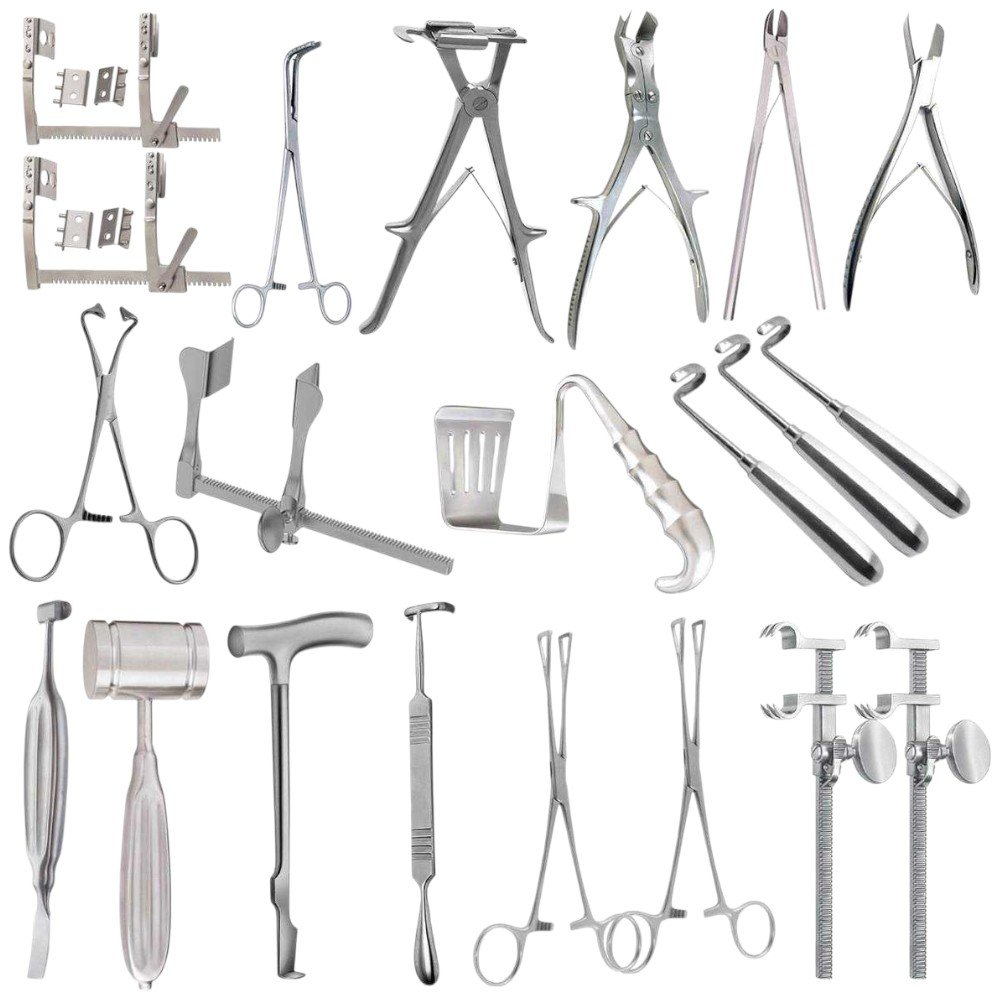
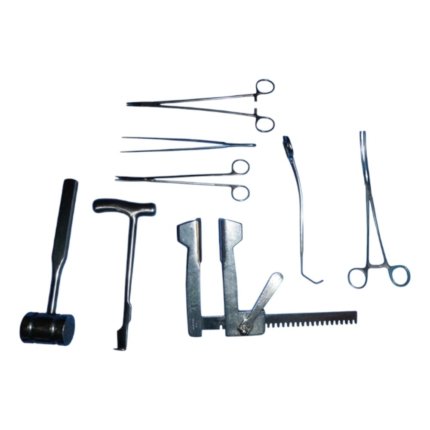

The Chest Trauma Surgery Set is designed for professional surgical environments where rapid and controlled access to the thoracic cavity may be required. Chest trauma procedures can involve injuries to the chest wall, lungs, pleura, blood vessels, and other thoracic structures, making appropriate surgical instruments important for exposure, tissue handling, hemostasis, and operative access.
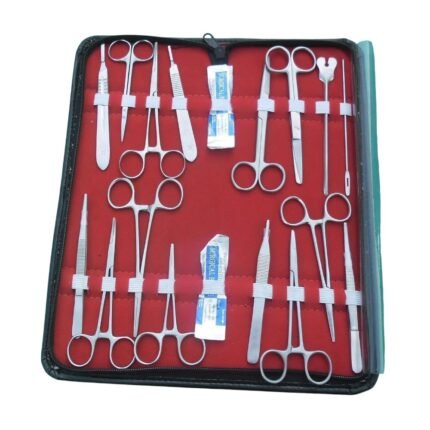
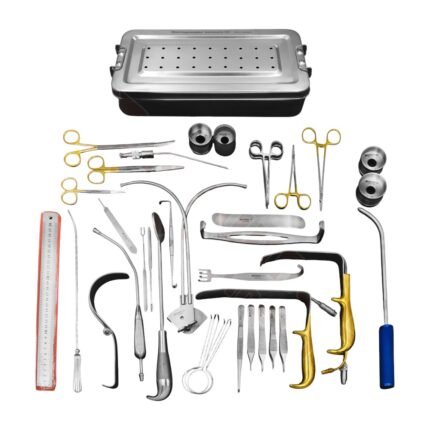
A dedicated chest trauma instrument set provides a coordinated selection of tools for different stages of thoracic surgery. Depending on the exact configuration, the set may include rib spreaders, thoracic retractors, vascular clamps, tissue forceps, dissecting forceps, surgical scissors, needle holders, clamps, suction instruments, periosteal elevators, and other thoracic surgical tools. Exact contents and quantities vary by set and should be verified before purchase or clinical use.
Thoracic retractors and rib spreaders can help establish and maintain access to the chest cavity during open procedures. Different blade sizes, spread widths, and retractor configurations may provide options for different chest-wall exposures. The appropriate device should be selected according to the procedure, anatomy, and surgeon’s technique.
Forceps and dissecting instruments support controlled handling of soft tissue and other structures within the operative field. Depending on their design, forceps may be used for tissue grasping, delicate manipulation, or handling of surgical materials. Long-shaft thoracic instruments can provide access to deeper structures while maintaining control from outside the incision.
Vascular clamps and hemostatic instruments may assist with temporary control of appropriately selected blood vessels or bleeding tissue during surgery. Their jaw configuration, length, and closing characteristics vary, so each clamp should be used only for its intended application.
Chest trauma surgery may require precise dissection and rapid management of the operative field. Surgical scissors can support controlled tissue cutting, while suction instruments can assist with removal of blood, fluid, or irrigation to improve visualization. Needle holders can support suturing and closure when required.
The set may be relevant to selected thoracic trauma, emergency thoracotomy, chest-wall surgery, pleural procedures, lung-related operations, and other open thoracic interventions. The exact clinical role of each instrument depends on its design and the specific procedure.
A coordinated chest trauma set can improve operating-room preparedness by keeping commonly required thoracic instruments together. This can help surgical staff prepare equipment efficiently and verify the availability of important instruments before an emergency or scheduled procedure. A standardized configuration can also facilitate postoperative counting and sterile-processing workflows.
Because trauma surgery may involve significant bleeding and complex anatomy, instrument selection and handling require appropriately trained clinical personnel. Retractors should be positioned carefully, clamps should be applied only where indicated, and instruments should be used according to their intended purpose and applicable surgical technique.
The exact material of the set depends on the manufacturer and product configuration. Thoracic surgical instruments are commonly manufactured from medical-grade stainless steel or other suitable surgical materials, but the exact alloy, finish, hardness, and manufacturing standard should be confirmed from the applicable product documentation.
Before each procedure, instruments should be inspected for structural integrity, proper alignment, mechanical operation, surface condition, and working-end integrity. Retractors and rib spreaders should be checked for smooth adjustment, while clamps and forceps should be inspected for proper jaw alignment and secure operation.
For reusable instruments, appropriate cleaning, disinfection, sterilization, and inspection are essential. Hinges, box locks, serrations, joints, spreading mechanisms, and other areas capable of retaining biological material require thorough processing. Reprocessing should follow validated manufacturer instructions applicable to the exact instruments.
The Chest Trauma Surgery Set is suitable for hospitals, trauma centers, emergency operating rooms, cardiothoracic and thoracic surgery departments, and professional surgical facilities requiring a dedicated selection of instruments for chest trauma and thoracic procedures.
Key Features
- Specialized chest trauma surgical instrument set
- Designed for thoracic and emergency chest procedures
- Supports controlled surgical exposure and access
- May include rib spreaders and thoracic retractors
- Supports tissue handling and dissection
- May include vascular and hemostatic clamps
- Useful for selected emergency thoracic procedures
- Suitable for open chest and trauma surgery workflows
- Long instruments may provide access to deeper operative fields
- Organized set supports rapid operating-room preparation
- Working ends and mechanical components require routine inspection
- Reprocessing should follow validated manufacturer instructions
Product Specifications
| Specification | Details |
|---|---|
| Product Name | Chest Trauma Surgery Set |
| Product Type | Thoracic / Trauma Surgical Instrument Set |
| Primary Specialty | Thoracic Surgery / Trauma Surgery |
| Primary Application | Chest Trauma and Thoracic Procedures |
| Primary Functions | Exposure, Retraction, Dissection, Hemostasis, Tissue Handling |
| Surgical Region | Chest / Thoracic Cavity |
| Instrument Types | Configuration Dependent |
| Possible Instruments | Rib Spreaders, Retractors, Clamps, Forceps, Scissors, Suction, Needle Holders |
| Working Ends | Thoracic / Surgical Profiles |
| Instrument Length | Configuration Dependent |
| Material | Surgical Instrument Material, Configuration Dependent |
| Set Quantity | Configuration Dependent |
| Reusable | Depending on Individual Components |
| Sterilization | Follow Validated Reprocessing Instructions |
| Storage | Surgical Tray or Suitable Instrument Container |
| Contents | Verify Exact Chest Trauma Set Configuration Before Use |
FAQs
What is a chest trauma surgery set used for?
A chest trauma surgery set provides instruments for selected thoracic trauma and emergency procedures involving surgical exposure, tissue handling, dissection, hemostasis, and operative access.
What instruments may be included in a chest trauma set?
Depending on the configuration, the set may include rib spreaders, thoracic retractors, forceps, scissors, vascular clamps, hemostatic clamps, suction instruments, needle holders, and other thoracic tools.
Can this set be used for thoracotomy?
Appropriately configured thoracic instruments can support selected thoracotomy procedures, including exposure and tissue-handling tasks.
What is the purpose of a rib spreader?
A rib spreader is used to maintain controlled separation of the ribs and provide access to the thoracic cavity during selected open chest procedures.
Can the set be used during emergency chest surgery?
A suitably configured chest trauma set may support selected emergency thoracic procedures, but the exact instruments required depend on the injury, surgical approach, and clinical situation.
What are thoracic retractors used for?
Thoracic retractors help maintain exposure of the operative field by holding selected tissues or structures away from the surgical site.
Why are vascular clamps included in thoracic surgery sets?
Vascular clamps may provide temporary control of appropriately selected vessels during procedures where vascular management is required.
Can this set be used for chest-wall surgery?
Compatible instruments may support selected chest-wall procedures involving soft tissue, ribs, and related structures.
Does every chest trauma set contain the same instruments?
No. Set configurations vary by manufacturer and intended application. The exact instrument inventory should be confirmed before purchase.
Are the instruments reusable?
They may be reusable when specifically designed and labeled for repeated clinical use. Reusable instruments must be properly cleaned, inspected, sterilized, and maintained.
How should chest trauma instruments be sterilized?
Cleaning and sterilization should follow validated manufacturer instructions for the exact instruments and materials. Rib spreaders, hinges, locks, clamps, and other mechanical areas require careful processing.
What should be inspected before using the chest trauma set?
Check retractors and spreaders for secure movement, clamps and forceps for proper jaw alignment, scissors for blade condition, and all instruments for corrosion, deformation, contamination, or other damage.



Reviews
There are no reviews yet.