
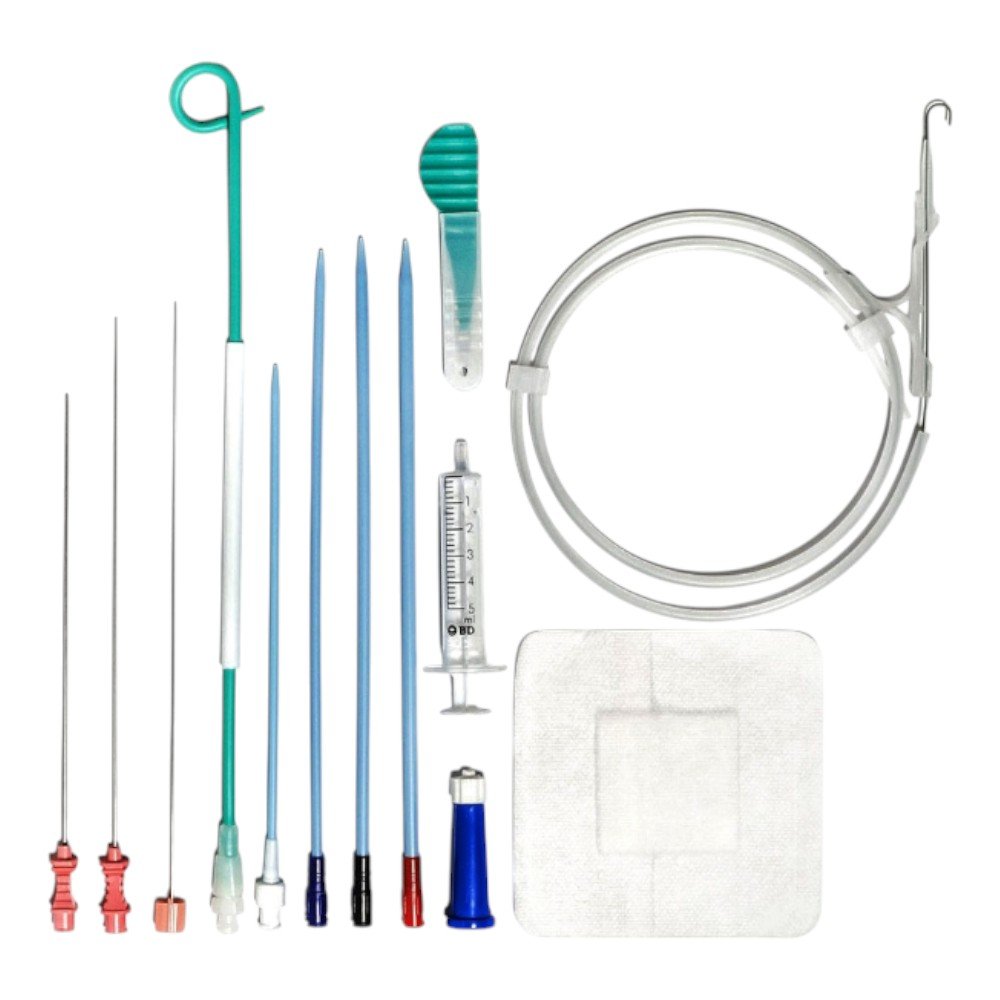


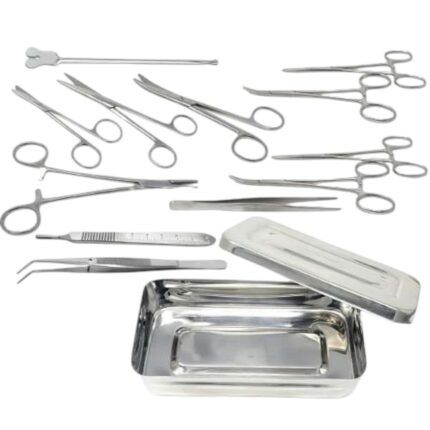
The Abscess Drainage Set is designed for healthcare professionals performing incision and drainage procedures in general surgery, emergency medicine, outpatient surgery, and other clinical environments. Abscess drainage involves establishing controlled access to a localized collection and allowing its contents to drain, with the instruments selected according to the location, size, depth, and clinical characteristics of the lesion.
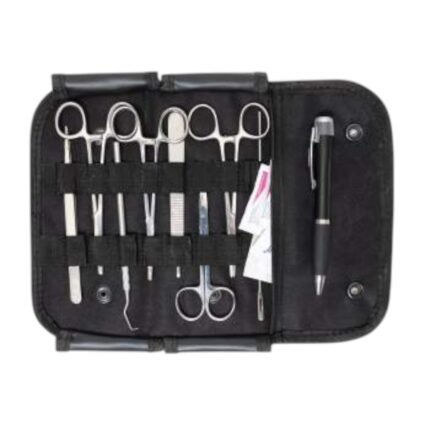
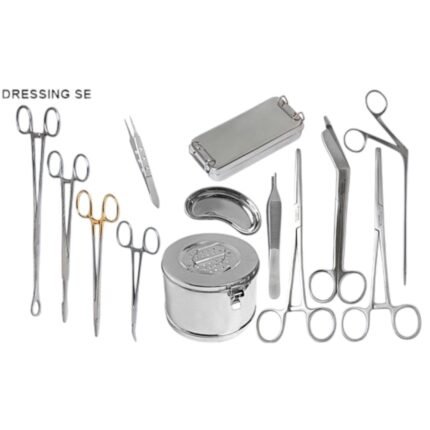
A dedicated drainage set brings commonly required surgical instruments together in an organized configuration. Depending on the exact contents, an abscess drainage kit may include scalpel handles, surgical scissors, tissue forceps, hemostatic clamps, probes, retractors, curettes, dressing forceps, and other minor surgical instruments. The exact number and type of components should be verified against the supplied set configuration.
A scalpel may be used to create the required incision when clinically indicated, while forceps and clamps can assist with controlled handling of tissue and surgical materials. Probes may be used for examination or controlled exploration of an accessible cavity, while retractors can help maintain visibility of the operative site.
Hemostatic instruments can assist with managing appropriately selected bleeding points when required. Different forceps and scissors provide different approaches to tissue handling and cutting. The surgeon or qualified clinician selects the appropriate instrument based on the anatomy and the specific drainage procedure.
The set may be useful for selected procedures involving skin and soft-tissue abscesses, localized collections, wound-related drainage, and minor surgical interventions. Clinical assessment is essential before drainage because not every lump or fluid collection represents an abscess, and treatment may differ depending on the underlying condition.
A coordinated abscess drainage set can improve operating-room and procedure-room organization. Keeping frequently required instruments together makes preparation more efficient and helps staff check that the necessary equipment is available before the procedure. A defined set also supports postoperative counting, cleaning, inspection, and reassembly.
The compact nature of many drainage procedures makes appropriately sized instruments particularly useful. Fine forceps can assist with controlled tissue handling, while suitable retractors can improve access to the incision. Longer instruments may be selected when the operative field is deeper, subject to the specific instrument configuration.
Proper infection-control practices are essential during abscess drainage because these procedures frequently involve contaminated or potentially infected material. Instruments must be handled according to the healthcare facility’s infection-prevention procedures, and reusable instruments must undergo appropriate decontamination, cleaning, sterilization, and inspection.
Before use, each instrument should be carefully examined for structural integrity, working-end alignment, corrosion, mechanical function, and visible contamination. Scalpels and cutting instruments should be checked for appropriate blade attachment, forceps for proper jaw alignment, and hinged instruments for smooth movement.
The exact material and construction depend on the individual instruments included in the set. General surgical instruments are commonly manufactured from medical-grade stainless steel or other suitable materials, but the exact alloy, finish, and manufacturing standard should be confirmed from the applicable product documentation.
For reusable components, cleaning should remove all visible biological material before sterilization. Hinges, serrations, box locks, joints, and narrow instrument interfaces require particular attention because contamination can remain in difficult-to-access areas. Sterilization should be performed using a validated method suitable for the individual instrument.
The Abscess Drainage Set is suitable for hospitals, emergency departments, general surgery units, outpatient procedure rooms, urgent-care facilities, medical clinics, and other professional healthcare environments requiring a dedicated selection of instruments for incision and drainage procedures.
Key Features
- Specialized abscess drainage surgical instrument set
- Designed for incision and drainage procedures
- Suitable for general surgery and minor surgical applications
- Supports controlled tissue handling and operative access
- May include scalpels, forceps, scissors, clamps, probes, and retractors
- Useful for selected skin and soft-tissue drainage procedures
- Compact configuration supports procedure-room organization
- Suitable for professional clinical environments
- Working ends and mechanical components require routine inspection
- Supports organized preparation of drainage procedures
- Reusable instruments require appropriate decontamination and sterilization
- Exact contents depend on the supplied set configuration
Product Specifications
| Specification | Details |
|---|---|
| Product Name | Abscess Drainage Set |
| Product Type | Minor Surgical / Drainage Instrument Set |
| Primary Specialty | General Surgery / Minor Surgery |
| Common Applications | Incision and Drainage of Selected Abscesses |
| Primary Function | Incision, Drainage, Tissue Handling and Wound Access |
| Instrument Types | Configuration Dependent |
| Possible Instruments | Scalpel Handles, Forceps, Scissors, Clamps, Probes, Retractors |
| Working Ends | Various Surgical Profiles |
| Instrument Length | Model Dependent |
| Material | Surgical Instrument Material, Configuration Dependent |
| Set Quantity | Configuration Dependent |
| Reusable | Depending on Individual Components |
| Sterilization | Follow Validated Reprocessing Instructions |
| Storage | Surgical Tray or Suitable Instrument Container |
| Intended Setting | Hospital / Clinic / Procedure Room |
| Contents | Verify Exact Set Configuration Before Use |
FAQs
What is an abscess drainage set used for?
An abscess drainage set provides surgical instruments for selected incision and drainage procedures involving localized skin and soft-tissue collections.
What instruments are included in an abscess drainage set?
Depending on the configuration, the set may include scalpel handles, tissue forceps, dressing forceps, scissors, hemostatic clamps, probes, retractors, and other minor surgical tools.
Can this set be used for incision and drainage?
Yes. The instruments are intended to support the different steps involved in selected incision and drainage procedures, according to the clinician’s established technique.
Can the set be used for skin abscesses?
Appropriately configured drainage instruments can support selected procedures involving superficial skin and soft-tissue abscesses.
What is the purpose of forceps in abscess drainage?
Forceps may be used for controlled handling of tissue, dressings, packing material, or other surgical materials depending on the specific instrument design.
Why are hemostatic clamps included in drainage sets?
Hemostatic clamps can assist with controlled management of appropriately selected bleeding points during a procedure when required.
Are retractors needed for every abscess drainage procedure?
Not necessarily. The need for a retractor depends on the location, depth, size, and exposure requirements of the specific procedure.
Can this set be used in an emergency department?
A suitably configured abscess drainage set may be useful in emergency and urgent-care procedure environments where incision and drainage procedures are performed by appropriately trained clinicians.
Does an abscess drainage set diagnose an abscess?
No. The diagnosis and treatment plan require clinical assessment. The instrument set is intended to support a procedure and is not a diagnostic device.
Are the instruments reusable?
They may be reusable when specifically designed and labeled for repeated clinical use. Reusable instruments must be cleaned, inspected, sterilized, and maintained appropriately.
How should an abscess drainage set be sterilized?
Reusable instruments should be cleaned and sterilized according to validated manufacturer instructions and the healthcare facility’s infection-control procedures.
What should be inspected before using the set?
Check all instruments for cleanliness, structural integrity, proper alignment, smooth mechanical operation, corrosion, damaged working ends, and other signs of wear before clinical use.



Reviews
There are no reviews yet.