


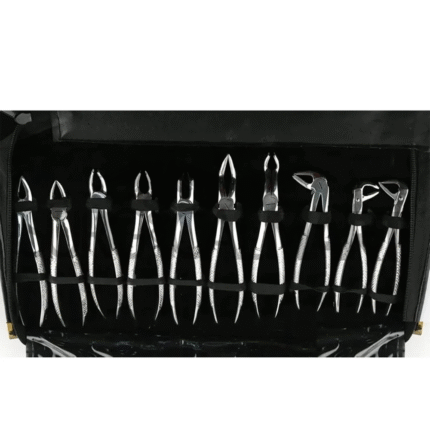
The Periosteal Elevator Set is designed to provide surgeons with a selection of specialized instruments for periosteal elevation, tissue separation, and controlled exposure of bone during surgical procedures. Periosteal elevators are widely used across orthopedic, trauma, dental, oral and maxillofacial, and reconstructive surgery where careful manipulation of the periosteum and surrounding soft tissue is required.
A dedicated elevator set provides multiple instrument profiles that can accommodate different anatomical areas and surgical approaches. Depending on the configuration, the set may include elevators with varying blade widths, lengths, curvatures, or working-end profiles. These variations allow qualified healthcare professionals to select an instrument appropriate to the operative field and the required degree of tissue control.
The working end of a periosteal elevator is designed to facilitate controlled separation of periosteal tissue from the underlying bone. The blade profile can provide leverage and tactile feedback while helping the surgeon manipulate tissue within the intended surgical field. Different shapes may be useful for accessing broad surfaces, confined anatomical areas, or curved bone structures. Exact working-end designs and dimensions depend on the specific set configuration.
Periosteal elevators are commonly encountered in orthopedic and trauma surgery during procedures where bone exposure is required. They can also be used in dental and maxillofacial surgery for elevation of mucoperiosteal tissues and access to underlying structures. In reconstructive and other specialty procedures, the appropriate elevator may assist with controlled soft-tissue management according to the surgeon’s established technique.
The instruments are commonly manufactured from surgical stainless steel or another suitable medical instrument material. Stainless-steel construction can provide strength, corrosion resistance, and durability for reusable surgical instrumentation when proper cleaning and maintenance procedures are followed. The exact stainless-steel grade, surface finish, and hardness should be confirmed from the manufacturer’s specifications.
Ergonomic handle construction can help provide secure control during instrument manipulation. The working blades should be properly formed, smoothly finished, and free from defects that could affect performance. Regular inspection is especially important for the blade edges, tips, handles, and junctions to identify bending, corrosion, cracking, or other damage.
A multi-instrument periosteal elevator set can simplify preparation by keeping commonly required elevator sizes and profiles together. This makes the set useful for orthopedic operating rooms, trauma departments, dental clinics, oral and maxillofacial surgery units, and other professional surgical environments. The exact suitability depends on the instruments included in the selected configuration.
Reusable periosteal elevators should be cleaned, inspected, and sterilized after use according to the manufacturer’s validated instructions and the healthcare facility’s established instrument-processing protocols. Instruments should be protected from excessive force and contact with other devices that could damage their working surfaces. Proper maintenance helps preserve instrument alignment, surface condition, and functional performance.
The Periosteal Elevator Set offers a versatile solution for professional surgical teams requiring specialized instruments for periosteal elevation and controlled tissue manipulation. Multiple configurations within one set can provide greater flexibility across different surgical fields while supporting efficient instrument organization.
Exact instrument quantity, blade dimensions, working-end profiles, handle design, material specification, and sterilization requirements should be confirmed with the manufacturer or supplier before purchase and clinical use.
Key Features
- Specialized periosteal elevator instrument set
- Designed for controlled periosteal elevation
- Supports soft-tissue separation from bone
- Suitable for orthopedic and trauma surgery
- Useful for dental and maxillofacial procedures
- Multiple profiles or sizes depending on configuration
- Designed for controlled surgical manipulation
- Commonly manufactured from surgical stainless steel
- Ergonomic designs available depending on configuration
- Durable construction with appropriate maintenance
- Suitable for professional operating-room environments
- Intended for use by qualified healthcare professionals
Product Specifications
| Specification | Details |
|---|---|
| Product Name | Periosteal Elevator Set |
| Instrument Type | Periosteal Elevators |
| Primary Application | Periosteal Elevation and Tissue Separation |
| Surgical Specialties | Orthopedic, Trauma, Dental, Maxillofacial |
| Set Contents | Configuration-dependent |
| Blade Profiles | Multiple profiles depending on set |
| Blade Dimensions | Manufacturer-dependent |
| Handle Design | Manufacturer-dependent |
| Material | Surgical stainless steel or manufacturer-specified material |
| Finish | Manufacturer-dependent |
| Reusable | Where specified by manufacturer |
| Sterilization | Follow manufacturer instructions and validated facility protocols |
| Intended Users | Qualified Healthcare Professionals |
FAQs
What is a periosteal elevator used for?
A periosteal elevator is used by qualified surgeons to assist with controlled elevation and separation of periosteal tissue from bone during appropriate surgical procedures.
What is included in a Periosteal Elevator Set?
The exact contents vary by manufacturer. A set may contain elevators with different blade widths, lengths, curves, and working-end profiles.
Are periosteal elevators used in orthopedic surgery?
Yes. They are commonly used in selected orthopedic and trauma procedures where controlled bone exposure and periosteal manipulation are required.
Can periosteal elevators be used in dental surgery?
Yes. Appropriate periosteal elevators are widely used in dental and oral surgery for elevation of mucoperiosteal tissues, depending on the specific procedure.
What material are periosteal elevators made from?
They are commonly manufactured from surgical stainless steel or another suitable medical instrument material. The exact material grade should be confirmed from the manufacturer’s specifications.
Are periosteal elevators reusable?
They can be reusable when supplied and labeled as reusable surgical instruments. Proper cleaning, inspection, maintenance, and sterilization are required between uses.
How should a periosteal elevator set be sterilized?
Reusable instruments should be cleaned and sterilized according to the manufacturer’s validated instructions and the healthcare facility’s approved instrument-processing protocol.
Why use a set instead of a single periosteal elevator?
A set can provide multiple working-end profiles and sizes, allowing qualified professionals to select an appropriate instrument for different anatomical areas and surgical requirements.




Reviews
There are no reviews yet.