
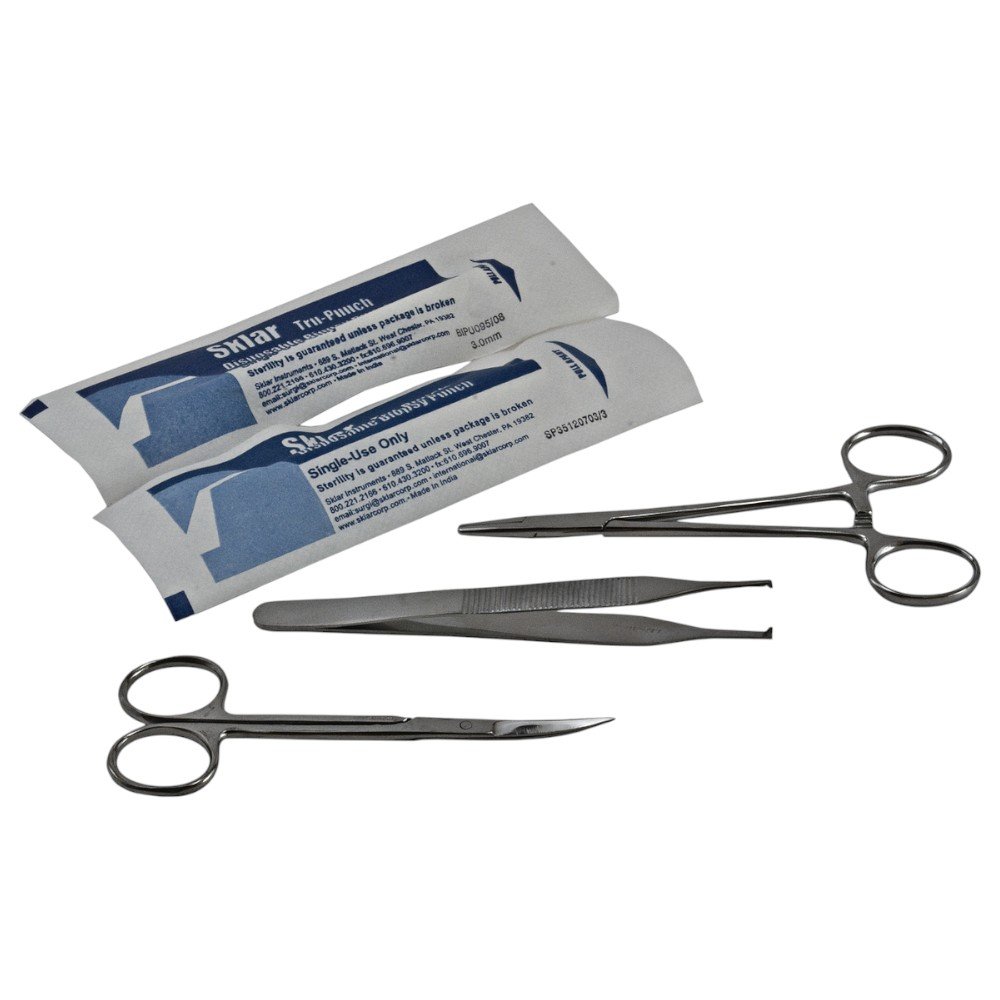
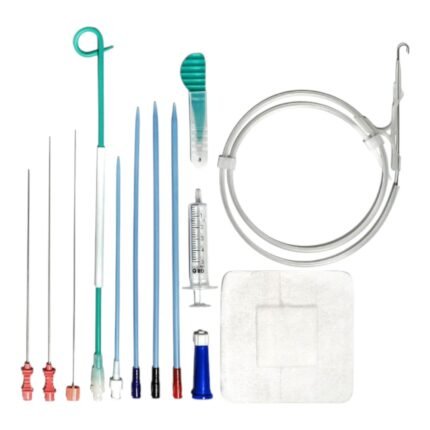

The Biopsy Set is designed for healthcare professionals performing surgical and diagnostic procedures that require the removal or collection of tissue specimens for examination. A dedicated biopsy instrument set brings commonly required tools together in an organized configuration, helping support efficient preparation and controlled handling during tissue-sampling procedures.
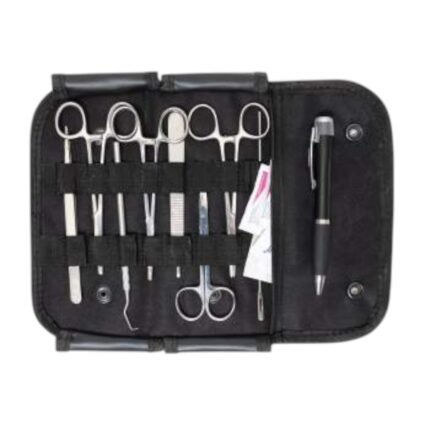
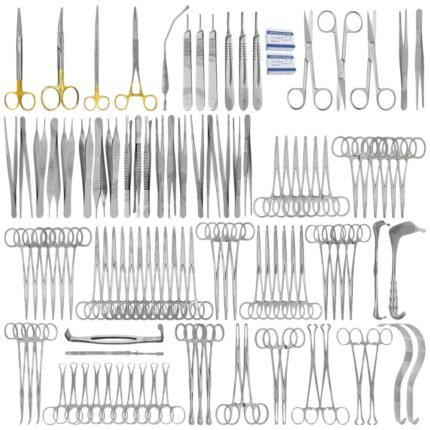
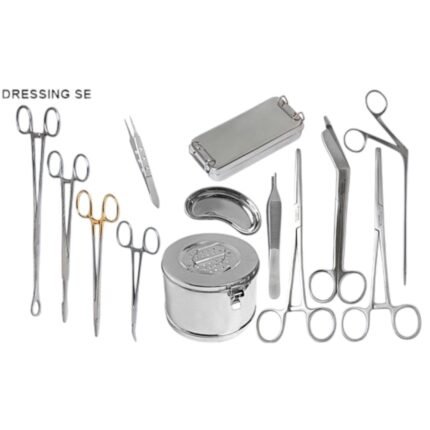
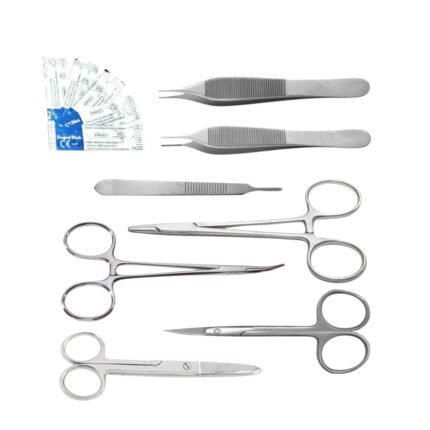
Biopsy procedures can vary significantly depending on the anatomical site, depth, size of the target area, and method of tissue collection. For this reason, biopsy instruments are available in a variety of shapes and sizes. Depending on the exact configuration, a biopsy set may include biopsy forceps, tissue forceps, scissors, scalpels, curettes, punches, needles, probes, retractors, and specimen-handling instruments.
Biopsy forceps are designed to grasp and remove selected tissue samples. Their working jaws may be smooth, toothed, fenestrated, or otherwise specialized according to their intended use. A suitable forceps configuration allows controlled handling of the specimen while minimizing unnecessary manipulation.
A biopsy punch or curette, when included, may provide an alternative method of obtaining tissue. Punches can be used for selected skin and soft-tissue sampling, while curettes may be used for controlled tissue removal where appropriate. The exact application depends on the instrument design and clinical procedure.
Scalpels and surgical scissors may support access to the biopsy site, incision, tissue dissection, or preparation of the specimen. Retractors can assist with maintaining exposure when the biopsy site requires additional visualization. Probes and other fine instruments may provide controlled localization or manipulation of tissue according to the procedure.
The Biopsy Set may be used in several clinical specialties, including general surgery, dermatology, gynecology, ENT, oral surgery, plastic surgery, and other diagnostic or surgical settings, depending on the individual instrument configuration. Not every biopsy set is appropriate for every anatomical site or biopsy technique, so the exact contents should be reviewed before use.
An organized biopsy instrument set can improve procedure-room workflow by keeping commonly required instruments together. This allows healthcare staff to prepare the work area efficiently and confirm that appropriate tissue-sampling instruments are available before the procedure begins. A defined set can also simplify instrument counting and sterile-processing procedures.
Specimen handling is an important part of biopsy procedures. Instruments should be selected and used in a manner appropriate for the intended specimen, and collected tissue should be transferred into the designated specimen container according to the facility’s clinical protocol. The instrument set itself does not determine the pathology processing method or diagnostic interpretation.
The exact material and construction of the instruments depend on the manufacturer and product configuration. Surgical biopsy instruments are commonly manufactured from medical-grade stainless steel or other suitable materials, but the specific alloy, finish, sharpness, and manufacturing standards should be confirmed from the applicable product documentation.
Before use, all reusable biopsy instruments should be inspected for tip integrity, jaw alignment, cutting-edge condition, corrosion, structural damage, and proper mechanical function. Fine instruments should be handled carefully to avoid bending or damaging their working ends.
For reusable components, cleaning, disinfection, sterilization, and inspection are essential. Biopsy instruments can come into direct contact with tissue and biological material, so thorough cleaning is important, particularly around jaws, hinges, serrations, joints, and other areas that may retain residue.
Single-use biopsy devices, when specifically labeled as disposable, should not be reused or resterilized. Reusable instruments should be processed according to validated manufacturer instructions and the healthcare facility’s infection-control procedures.
The Biopsy Set is suitable for hospitals, outpatient surgical centers, diagnostic clinics, specialty practices, teaching facilities, and professional healthcare environments requiring a dedicated selection of instruments for tissue sampling and related minor surgical procedures.
Key Features
- Specialized biopsy surgical instrument set
- Designed for tissue sampling and specimen collection procedures
- Supports controlled tissue grasping and removal
- May include biopsy forceps, punches, curettes, scissors, and scalpels
- Suitable for selected surgical and diagnostic applications
- Useful in dermatology, general surgery, ENT, and other specialties
- Supports controlled access to biopsy sites
- Organized set simplifies procedure-room preparation
- Fine working ends require careful handling and inspection
- Suitable for professional clinical environments
- Reusable status depends on individual instrument design
- Exact contents depend on the supplied set configuration
Product Specifications
| Specification | Details |
|---|---|
| Product Name | Biopsy Set |
| Product Type | Surgical Biopsy Instrument Set |
| Primary Function | Tissue Sampling and Specimen Collection |
| Primary Applications | Biopsy and Minor Surgical Procedures |
| Specialties | Configuration Dependent |
| Instrument Types | Configuration Dependent |
| Possible Instruments | Biopsy Forceps, Punches, Curettes, Scissors, Scalpels, Probes |
| Working Ends | Tissue-Sampling Profiles |
| Instrument Length | Model / Configuration Dependent |
| Material | Surgical Instrument Material, Configuration Dependent |
| Set Quantity | Configuration Dependent |
| Reusable | Component Specific |
| Sterilization | Follow Validated Reprocessing Instructions |
| Storage | Surgical Tray or Suitable Instrument Container |
| Clinical Use | Professional Healthcare Setting |
| Contents | Verify Exact Biopsy Set Configuration Before Use |
FAQs
What is a biopsy set used for?
A biopsy set provides surgical instruments for obtaining tissue samples, handling specimens, and preparing the biopsy site during selected diagnostic and surgical procedures.
What instruments are included in a biopsy set?
Depending on the configuration, a biopsy set may contain biopsy forceps, tissue forceps, punches, curettes, scissors, scalpels, probes, retractors, or other tissue-sampling instruments.
Can a biopsy set be used for skin biopsies?
Appropriately configured biopsy instruments may support selected dermatologic and skin biopsy procedures. The specific instrument should match the biopsy technique.
Can these instruments be used for surgical biopsies?
Yes. Suitable biopsy instruments can support selected surgical tissue-sampling procedures involving controlled incision, dissection, grasping, and specimen removal.
What is the purpose of biopsy forceps?
Biopsy forceps are designed to grasp and remove a selected tissue specimen using appropriately configured jaws.
What is a biopsy punch?
A biopsy punch is a cylindrical cutting instrument designed to obtain a tissue sample from selected skin or soft-tissue areas.
What is a biopsy curette used for?
A biopsy curette may be used for controlled scraping or removal of selected tissue depending on its working-end design and intended clinical application.
Can the same biopsy set be used for every type of biopsy?
No. Different anatomical sites and biopsy techniques require different instrument designs. The exact set configuration should be matched to the intended procedure.
Are biopsy instruments reusable?
Some biopsy instruments are designed for repeated clinical use, while others are single-use. Reusability must be determined from the specific product labeling.
How should reusable biopsy instruments be sterilized?
Reusable instruments should be cleaned, disinfected, and sterilized according to validated manufacturer instructions and the healthcare facility’s infection-control procedures.
What should be inspected before using a biopsy set?
Inspect the working ends, jaws, cutting edges, hinges, shafts, and handles for damage, corrosion, deformation, contamination, and proper mechanical operation.
Does the biopsy set include specimen containers?
Not necessarily. Specimen containers and pathology-processing materials should only be considered included when specifically listed in the product configuration.



Reviews
There are no reviews yet.