
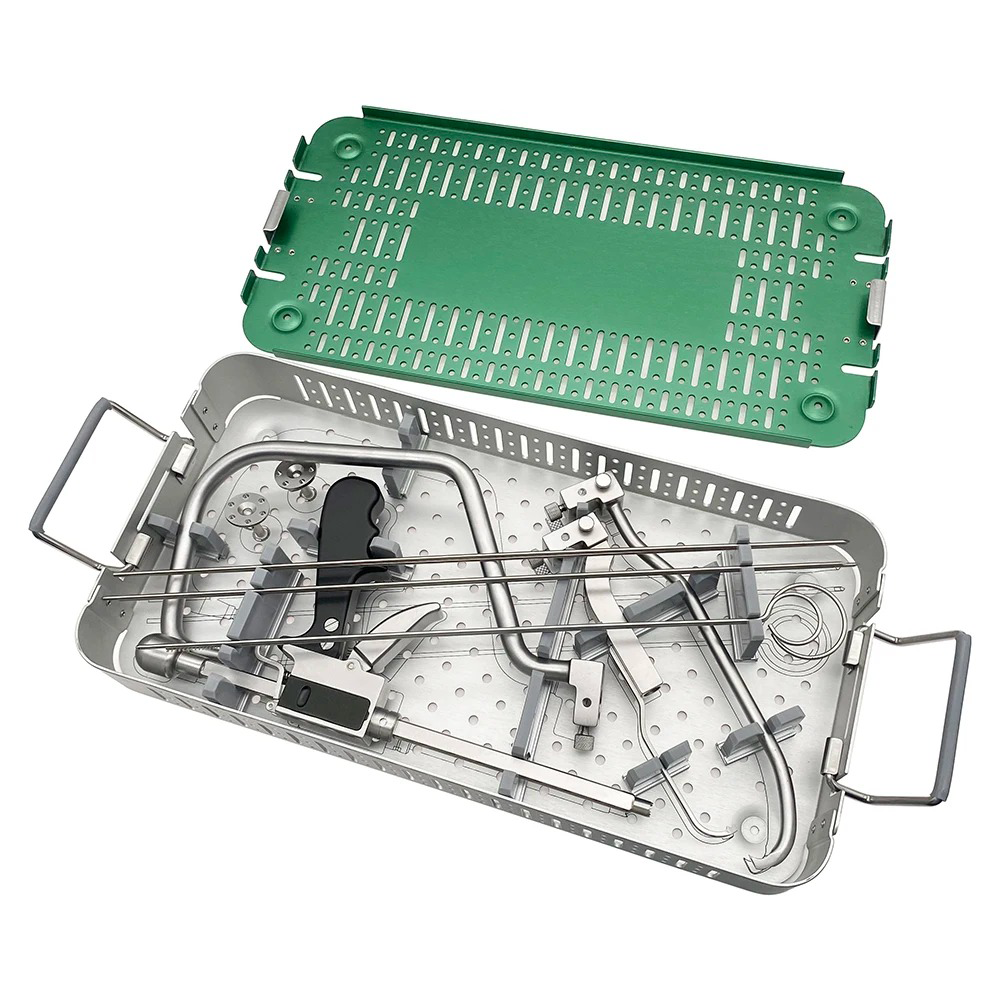
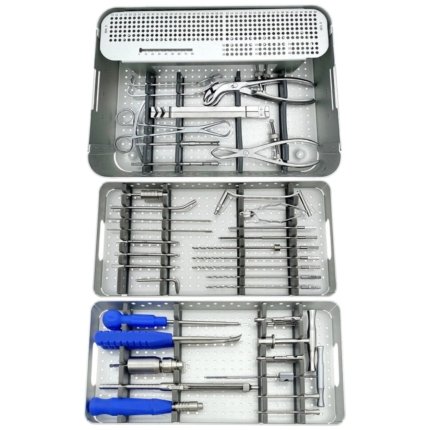
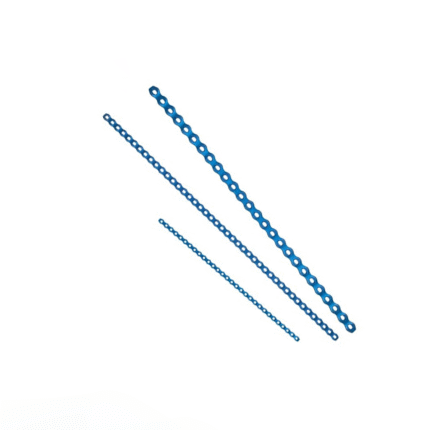
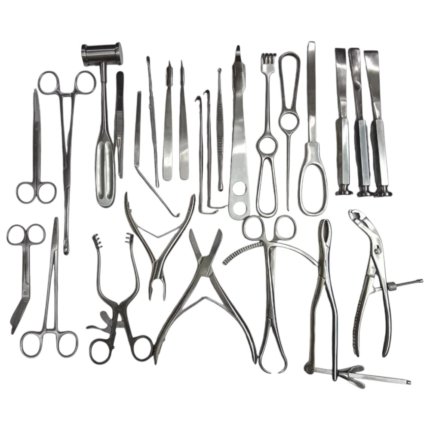
The Orthopedic Collinear Reduction Clamp for Trauma Plate Instrument – Surgical Instrument Set is a specialized orthopedic reduction instrument designed to assist surgeons with controlled manipulation and alignment of bone fragments during fracture fixation. Collinear reduction clamps are particularly useful when accurate positioning of a fracture is required before or during the application of an orthopedic plate.
Fracture reduction often requires controlled stabilization of individual bone segments while the surgeon evaluates alignment and prepares the fixation construct. A dedicated collinear reduction clamp can provide a mechanical means of grasping and manipulating selected bone fragments while maintaining the desired relationship between the fragments. This can help facilitate plate positioning and temporary stabilization during compatible trauma procedures.
The collinear design allows the clamp to approach the bone along a relatively aligned trajectory while providing controlled clamping force. Depending on the specific configuration, the instrument may incorporate pointed or specialized jaws intended to obtain purchase on bone. The surgeon determines the appropriate placement and clamping force according to the fracture pattern, bone quality, surgical approach, and fixation technique.
In orthopedic trauma surgery, reduction clamps are commonly used during procedures involving long-bone and periarticular fractures where accurate reduction is required before definitive fixation. The instrument can be useful during plate osteosynthesis and other fixation techniques where maintaining reduction while positioning a trauma plate is important.
The clamp may also assist with temporary stabilization during screw insertion. By maintaining a selected bone relationship, it can allow the surgical team to proceed with fixation while reducing unwanted movement of the fracture fragments. The clamp is not itself a definitive fixation device; its role is to assist with reduction and temporary control during the surgical procedure.
The trauma plate instrument application makes this clamp particularly relevant to procedures involving orthopedic plates. However, compatibility with a particular plate system should not be assumed. The clamp should be selected based on the surgical approach, bone anatomy, fracture configuration, required working depth, jaw design, and the intended fixation system.
Mechanical durability is important for reduction clamps because they may be exposed to substantial forces during fracture manipulation. The instrument should be inspected before use for damaged jaws, bent components, worn hinges, damaged threads, or malfunctioning locking mechanisms. Proper function is important for maintaining predictable control during surgery.
The clamp should be handled carefully to avoid excessive compression of bone or surrounding tissue. Its use should be based on the surgeon’s established reduction technique and the characteristics of the fracture. Appropriate positioning helps obtain stable purchase while limiting unnecessary soft-tissue interference.
For reusable instruments, proper reprocessing is essential. After use, the clamp should be thoroughly cleaned with particular attention to hinges, threaded components, serrated or pointed jaws, and other areas where biological material may remain. It should be rinsed, dried, inspected, lubricated where applicable, packaged, and sterilized according to the manufacturer’s validated instructions and facility protocols.
The Orthopedic Collinear Reduction Clamp for Trauma Plate Instrument – Surgical Instrument Set provides a practical solution for controlled fracture reduction and temporary bone stabilization during compatible orthopedic trauma procedures. Its specialized design supports precise bone manipulation and can assist surgical teams during plate fixation workflows.
Key Features
- Specialized orthopedic collinear reduction clamp
- Designed for controlled fracture reduction
- Supports bone fragment alignment and manipulation
- Suitable for orthopedic trauma surgery
- Useful during compatible plate fixation procedures
- Helps maintain temporary fracture reduction
- Designed for controlled mechanical bone purchase
- Supports surgical preparation before definitive fixation
- Useful for long-bone and selected periarticular fractures
- Durable construction for professional surgical use
- Designed for repeated handling where supplied as reusable
- Requires appropriate cleaning, inspection, and sterilization
Product Specifications
| Specification | Details |
|---|---|
| Product Name | Orthopedic Collinear Reduction Clamp |
| Instrument Type | Bone Reduction Clamp |
| Primary Specialty | Orthopedic Trauma Surgery |
| Main Function | Fracture Reduction & Bone Alignment |
| Application | Trauma Plate Fixation |
| Design | Collinear Clamp |
| Working End | Bone-Grasping Jaws |
| Use | Temporary Reduction / Stabilization |
| Surgical Application | Fracture Fixation |
| Construction | Surgical Instrument Construction |
| Reusable | Where supplied as reusable |
| Sterilization | Follow manufacturer and facility protocols |
| Compatibility | Verify with intended surgical technique and fixation system |
FAQs
What is a collinear reduction clamp?
A collinear reduction clamp is an orthopedic surgical instrument used to manipulate and temporarily hold bone fragments in alignment during fracture reduction and fixation procedures.
What is a collinear reduction clamp used for?
It is used for controlled fracture reduction, bone fragment manipulation, and temporary stabilization while preparing or applying orthopedic fixation such as trauma plates and screws.
Can this clamp be used for trauma plate fixation?
Yes. Collinear reduction clamps are commonly used during compatible trauma procedures to help maintain fracture reduction while an orthopedic plate is positioned and secured.
Is a reduction clamp a permanent fixation device?
No. A reduction clamp is generally a temporary reduction and stabilization instrument. Definitive fixation is achieved using the appropriate orthopedic implant system selected for the procedure.
What types of fractures can use a reduction clamp?
Reduction clamps may be used for various fractures where direct bone manipulation is appropriate, including selected long-bone and periarticular fractures. The appropriate clamp depends on anatomy, fracture pattern, surgical approach, and bone quality.
How does a collinear clamp help during surgery?
The clamp provides controlled mechanical purchase on selected bone fragments, allowing the surgeon to manipulate and maintain their position during reduction and preparation for definitive fixation.
How should a collinear reduction clamp be maintained?
Reusable clamps should be thoroughly cleaned, inspected, dried, and sterilized according to the manufacturer’s instructions. Hinges, jaws, threaded components, and locking mechanisms should receive particular attention during reprocessing.
Can the clamp be used with any trauma plate system?
Compatibility should not be assumed. The clamp should be selected according to the fracture, surgical technique, access requirements, and the specific fixation system being used.




Reviews
There are no reviews yet.