

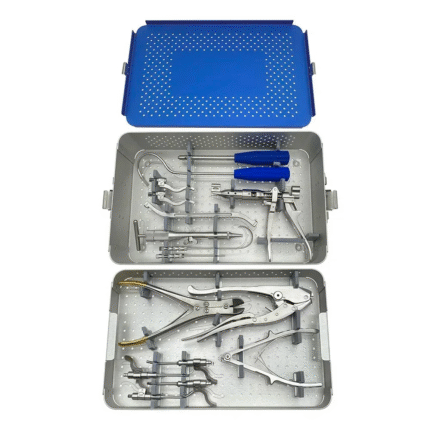
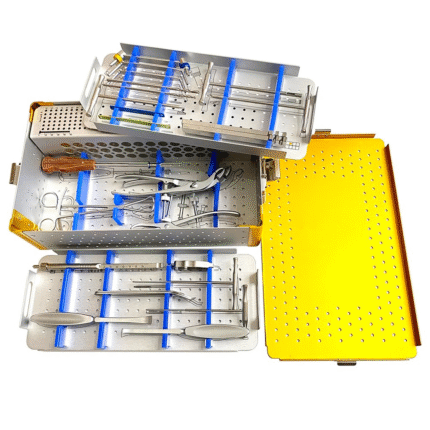
The Orthopedic Suture Hook – Rotator Cuff & Joint Ligament Reconstruction Repair Instrument (Arthroscopy Wire Pass System) is a specialized arthroscopy instrument designed to assist surgeons with controlled suture or wire passage during soft-tissue repair and reconstruction procedures. Its focused working tip allows the surgeon to manipulate and pass suture material through selected tissue structures while working through an arthroscopic approach.
Suture passage is an important step in many arthroscopic procedures. During rotator cuff repair, ligament reconstruction, and other joint procedures, the surgeon may need to position sutures through tendon, ligament, capsule, or other soft tissues before securing the repair. A dedicated suture hook can provide a controlled pathway for passing or retrieving suture material within the operative field.
The instrument can be useful in arthroscopic shoulder procedures, including selected rotator cuff repair techniques, as well as ligament and soft-tissue reconstruction procedures involving other joints. Its application depends on the surgeon’s preferred technique, the anatomy being treated, and the specific repair system being used.
The working end is designed for precise interaction with soft tissue and suture material. Depending on the specific configuration, the hook geometry may facilitate tissue penetration, suture capture, or controlled passage through the intended tissue layer. Users should select the appropriate hook design and dimensions according to the surgical procedure and arthroscopy system.
A controlled grip and appropriately balanced shaft can assist with accurate manipulation during minimally invasive procedures. The design is intended to help the surgeon maintain instrument control while navigating through an arthroscopic portal and positioning the working tip at the desired treatment site.
The Orthopedic Suture Hook may also be used as part of a broader arthroscopy instrument collection alongside suture passers, graspers, tissue punches, probes, cannulas, and other joint-specific instruments. When used as part of a coordinated instrumentation system, it can help support efficient handling of sutures during arthroscopic reconstruction.
For reusable versions, proper instrument processing is essential. Following the procedure, the instrument should be cleaned according to validated instructions, with particular attention to the working tip and any areas where biological material or suture debris may accumulate. Instruments should be inspected for tip damage, deformation, corrosion, or other defects before reuse. Sterilization should be performed using a validated method appropriate for the specific instrument and according to the manufacturer’s processing instructions.
The Orthopedic Suture Hook is suitable for orthopedic surgeons, arthroscopy specialists, sports-medicine operating rooms, hospitals, and surgical centers performing compatible soft-tissue repair and reconstruction procedures. Its specialized design supports precise suture handling where controlled arthroscopic access is required.
Key Features
- Designed for arthroscopic suture and wire passage
- Suitable for selected rotator cuff repair procedures
- Supports joint ligament reconstruction techniques
- Designed for controlled soft-tissue manipulation
- Useful for minimally invasive orthopedic procedures
- Precision working hook for suture capture or passage
- Suitable for arthroscopic joint surgery
- Supports controlled handling through an arthroscopy portal
- Can be used alongside compatible suture-passing instruments
- Durable construction for appropriate surgical use
- Reusable where the specific instrument is designed for repeated use
- Requires cleaning and sterilization according to validated protocols
Product Specifications
| Specification | Details |
|---|---|
| Product Name | Orthopedic Suture Hook |
| Instrument Category | Arthroscopy Instrument |
| Primary Function | Suture/Wire Passage |
| Surgical Applications | Rotator Cuff & Ligament Repair |
| Procedure Type | Arthroscopic Orthopedic Surgery |
| Tissue Application | Tendon, Ligament & Soft Tissue |
| Working End | Hook-Type Suture Passage Tip |
| Material | Surgical Instrument-Grade Material |
| Use | Manual Arthroscopic Instrumentation |
| Reusable | Yes, where applicable |
| Sterilization | Follow validated manufacturer instructions |
| Compatibility | Verify with the intended arthroscopy system |
FAQs
What is an orthopedic suture hook used for?
An orthopedic suture hook is used to assist with controlled passage, capture, or manipulation of suture material through soft tissue during selected arthroscopic repair and reconstruction procedures.
Can a suture hook be used for rotator cuff repair?
Yes. Suture hooks may be used in selected arthroscopic rotator cuff repair techniques to help pass or manipulate sutures through tendon tissue.
Is an orthopedic suture hook used for ligament reconstruction?
It can be used during selected ligament and soft-tissue reconstruction procedures where controlled suture passage is required. The specific application depends on the surgical technique and joint being treated.
What is the difference between a suture hook and a suture passer?
Both instruments can facilitate suture placement, but their working-end designs and mechanisms can differ. A suture hook generally uses a hook-shaped working tip, while dedicated suture passers may use other mechanisms for capturing and delivering suture.
Can this instrument be used in arthroscopic surgery?
Yes. The instrument is designed for arthroscopic orthopedic applications where controlled access and suture manipulation are required.
What tissues can a suture hook be used with?
Depending on the instrument design and surgical technique, it may be used with tendon, ligament, capsule, and other soft tissues during appropriate orthopedic procedures.
Is the orthopedic suture hook reusable?
Reusable versions can be processed for repeated use when permitted by the manufacturer. Cleaning, inspection, and sterilization should follow validated instructions.
How should an orthopedic suture hook be sterilized?
The instrument should be thoroughly cleaned and inspected before sterilization. Use a validated sterilization process appropriate for the instrument and follow the manufacturer’s instructions and facility protocol.




Reviews
There are no reviews yet.