
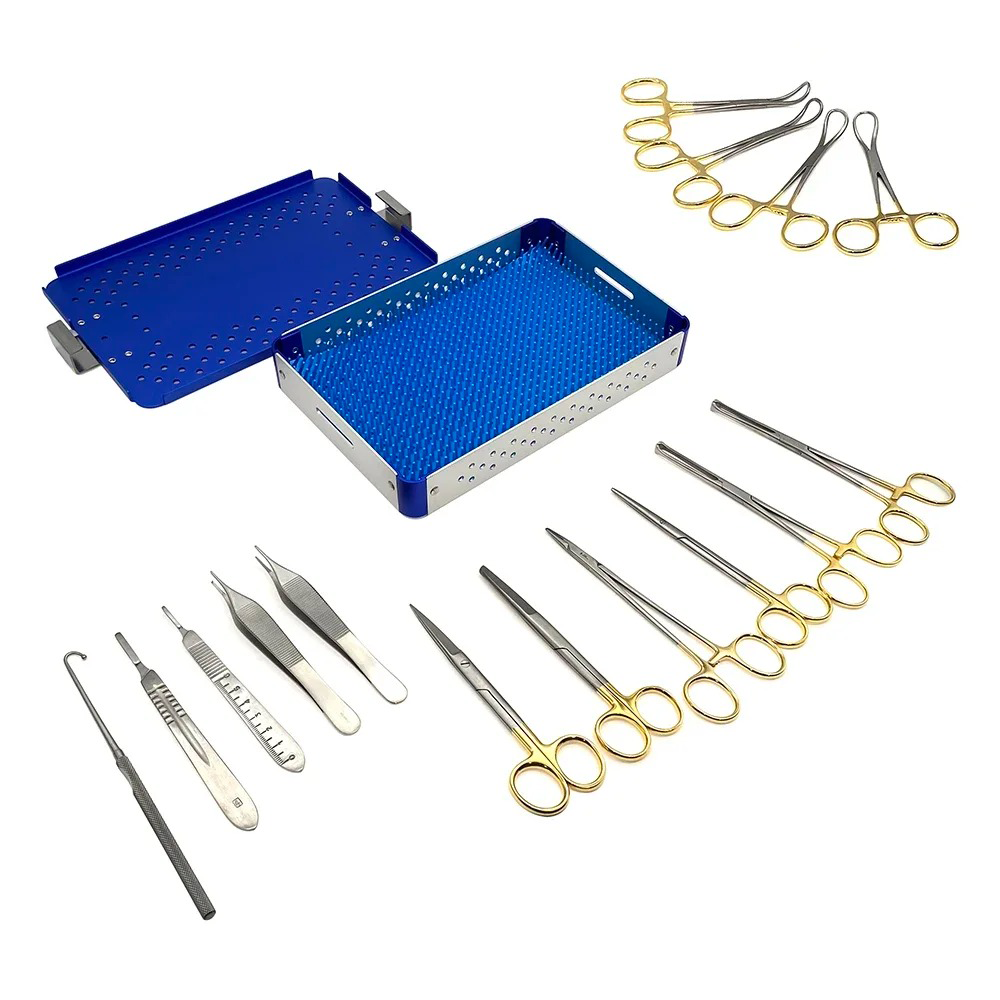
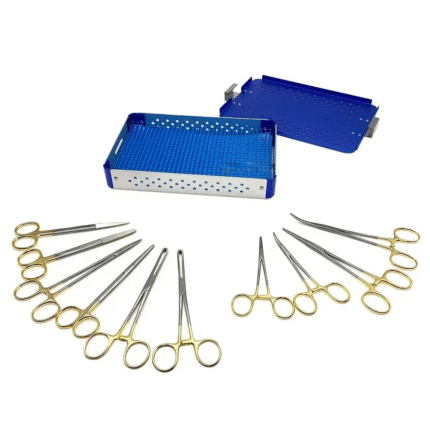

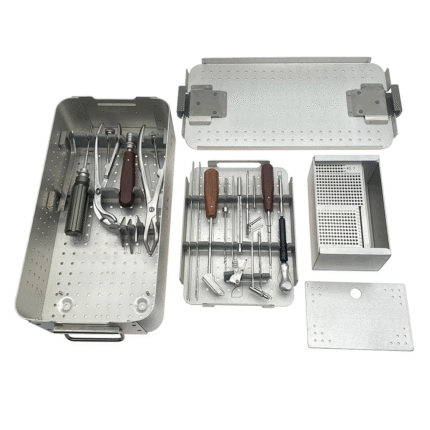
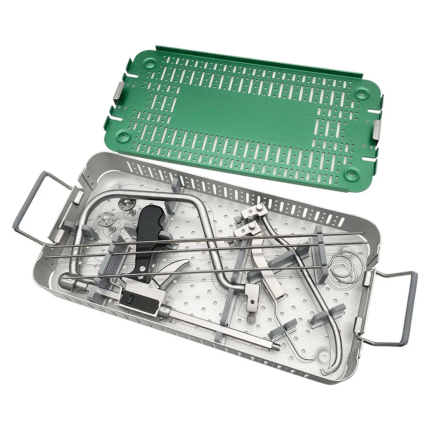
The Soft Tissue Surgical Instruments Kit Orthopedic Set Pet Surgical Instruments is designed to provide veterinary professionals with a practical collection of reusable surgical instruments for soft tissue procedures and selected orthopedic applications. The kit can support routine surgical tasks including tissue handling, dissection, grasping, cutting, suturing, exposure, and general operative manipulation depending on the exact instrument configuration.
Soft tissue surgery requires controlled handling of delicate anatomical structures. Appropriate surgical instruments allow the veterinary surgeon to perform individual procedural steps with greater control while reducing unnecessary tissue manipulation. A dedicated instrument kit can also simplify operating-room preparation by keeping commonly required tools together in one organized collection.
Depending on the supplied configuration, soft tissue surgical instruments may include tissue forceps, surgical scissors, hemostatic forceps, needle holders, retractors, scalpels, probes, or other general-purpose surgical tools. Because the product title does not specify an exact instrument count or individual contents, the actual configuration should be verified before purchase. Specific instruments should be selected according to the animal species, anatomical site, procedure, and surgeon’s preferred technique.
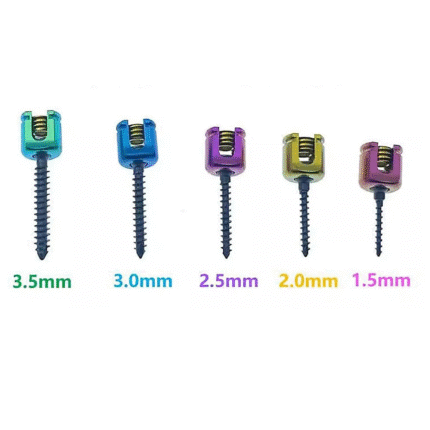
The kit can be useful in veterinary clinics, animal hospitals, surgical facilities, and educational or professional settings where appropriately sized veterinary surgical instruments are required. Its orthopedic application may extend to procedures where soft tissue handling is part of an orthopedic intervention, such as exposure and closure around a surgical site. It should not be assumed that a general soft tissue set contains every specialized instrument required for complex orthopedic fixation or reconstruction.
Instrument quality and mechanical condition are important for safe surgical handling. Before each procedure, instruments should be inspected for proper alignment, sharpness where applicable, secure joints, intact working surfaces, corrosion, and other signs of damage. Instruments that are bent, damaged, excessively worn, or mechanically compromised should be removed from service.
For reusable instruments, cleaning should begin as soon as practical after use. Particular attention should be given to hinged instruments, serrated surfaces, box locks, joints, and other areas where biological material can accumulate. After cleaning, instruments should be thoroughly rinsed and dried, inspected, packaged appropriately, and sterilized according to validated manufacturer instructions and the veterinary facility’s infection-control protocol.
The instruments should be used only for their intended function. For example, delicate tissue forceps should not be substituted for heavy bone-holding instruments, and scissors designed for soft tissue should not be used to cut materials outside their intended application. Correct instrument selection helps maintain instrument performance and supports appropriate surgical technique.
The Soft Tissue Surgical Instruments Kit provides a convenient foundation for veterinary surgical instrumentation where general soft tissue handling is required. Its usefulness for a specific procedure depends on the included instruments, their dimensions, and the requirements of the veterinary surgeon.
Key Features
- Veterinary soft tissue surgical instrument kit
- Designed for professional veterinary surgical environments
- Supports tissue handling and surgical dissection
- Useful for grasping, cutting, suturing, and operative manipulation
- Suitable for selected procedures involving orthopedic exposure and closure
- Practical collection for veterinary clinics and animal hospitals
- Instrument configuration may vary according to the supplied set
- Designed for controlled handling of soft tissue structures
- Instruments should be selected according to procedure and animal anatomy
- Suitable for reusable surgical processing when specified
- Requires inspection before every surgical procedure
- Cleaning and sterilization should follow validated protocols
Product Specifications
| Specification | Details |
|---|---|
| Product Type | Soft Tissue Surgical Instruments Kit |
| Primary Application | Veterinary Soft Tissue Surgery |
| Secondary Application | Selected Orthopedic Procedures |
| Intended Use | Tissue Handling, Dissection & Surgical Manipulation |
| Instrument Type | Veterinary Surgical Instruments |
| Material | Surgical Instrument-Grade Metal |
| Set Configuration | Configuration Dependent |
| Animal Use | Veterinary Applications |
| Reusable | Depending on instrument specifications |
| Sterilization | According to validated manufacturer instructions |
| Intended Users | Qualified Veterinary Professionals |
| Storage | As supplied / facility storage system |
FAQs
What is a soft tissue surgical instrument kit used for?
A soft tissue surgical kit provides instruments for common surgical tasks such as tissue handling, dissection, cutting, grasping, hemostasis, suturing, and wound closure.
Can this kit be used for veterinary surgery?
Yes. The product is intended for veterinary surgical applications, with suitability depending on the animal species, procedure, instrument dimensions, and exact kit configuration.
Can this soft tissue set be used during orthopedic surgery?
It can support soft tissue-related steps of selected orthopedic procedures, such as surgical exposure and closure. Specialized orthopedic procedures may require additional dedicated fixation and bone instruments.
What instruments are included in the kit?
The exact contents depend on the supplied configuration. Typical soft tissue kits may include forceps, scissors, hemostatic instruments, needle holders, retractors, and other general surgical tools. The exact instrument list should be confirmed before purchase.
Are these veterinary surgical instruments reusable?
Reusability depends on the individual instrument and manufacturer’s instructions. Instruments designated as reusable must be properly cleaned, inspected, and sterilized between procedures.
How should veterinary surgical instruments be sterilized?
Reusable instruments should be cleaned and sterilized according to validated manufacturer instructions and the veterinary facility’s established infection-control procedures.
What animals can these surgical instruments be used on?
Suitability depends on instrument size, design, and the animal’s anatomy. The veterinary surgeon should select instruments appropriate for the species and procedure.
How should the instruments be maintained?
Instruments should be cleaned promptly after use, thoroughly dried, inspected for damage and proper function, and stored appropriately after validated sterilization and processing.




Reviews
There are no reviews yet.