

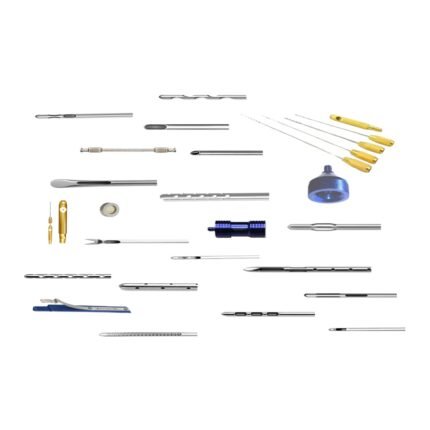
The 72 Pcs Plastic Surgery Instruments Set – Surgical Tools Kit is designed to support professional surgical teams performing plastic and reconstructive procedures. A dedicated plastic surgery instrument set combines multiple surgical tool types in an organized configuration, providing options for different stages of a procedure from initial exposure and dissection to tissue manipulation and wound closure.
Plastic surgery often requires precise handling of skin, subcutaneous tissue, fascia, and other delicate structures. Instruments with fine working ends, controlled grasping surfaces, specialized scissors, and precision needle holders can help the surgeon perform detailed operative maneuvers. The exact contents of this 72-piece configuration should be verified against the supplied inventory because instrument combinations vary between sets.
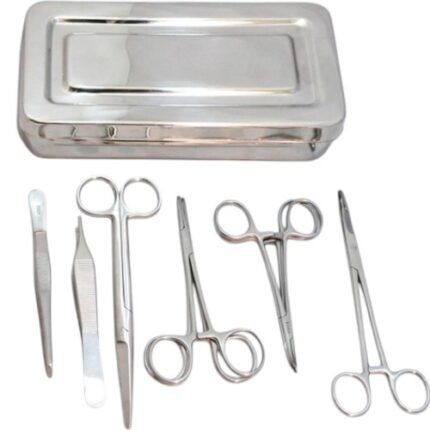
Depending on the configuration, the set may include tissue forceps, dissecting forceps, surgical scissors, hemostatic clamps, needle holders, retractors, hooks, probes, scalpel handles, and other plastic surgery instruments. Different instrument profiles provide flexibility for procedures requiring cutting, grasping, tissue retraction, dissection, hemostasis, and suturing.
Fine tissue forceps are commonly selected according to the type of tissue being handled and the required degree of grip. Smooth or atraumatic forceps can be appropriate for delicate tissue, while toothed designs may provide additional purchase where indicated. Proper instrument selection should always correspond to the specific tissue and surgical technique.
Specialized plastic surgery scissors can support precise tissue cutting and dissection. Straight and curved configurations may provide different approaches to the operative field, while fine blade profiles can help facilitate controlled cutting in procedures where precision is important.
Retractors and hooks may be used to improve visualization and access by gently maintaining separation of selected tissues. Their dimensions and working-end designs can vary widely depending on the anatomical region and procedure. A larger instrument set can therefore provide useful flexibility for different operative requirements.
The 72-piece configuration also supports organization in the operating room. Maintaining a broad selection of related instruments in one dedicated set can simplify tray preparation, instrument identification, and postoperative counting. It can also help sterile processing personnel organize instruments for cleaning, inspection, sterilization, and storage.
This type of set may support selected reconstructive, cosmetic, hand, facial, breast, wound, and soft-tissue procedures, depending on the individual instruments included. It should not be assumed that every instrument is appropriate for every plastic surgery operation. Additional specialized devices may be required for specific procedures.
The product is described as a plastic surgery instruments set, but exact material grade, surface finish, manufacturing tolerances, and instrument specifications should be confirmed from the applicable product documentation. Surgical instruments are commonly produced from medical-grade stainless steel or other suitable materials, but the precise alloy should not be assumed without documentation.
Ergonomic handling is important in plastic and reconstructive surgery because many procedures involve delicate tissue and precise suturing. Instruments should be used only for their intended function and should not be subjected to excessive force. Proper handling also helps protect fine tips, cutting edges, and locking mechanisms.
Before each procedure, every instrument should be inspected for alignment, structural integrity, surface condition, corrosion, mechanical function, and working-end condition. Scissors should be checked for proper blade alignment, forceps for jaw condition, clamps for smooth operation, and needle holders for secure needle grip.
For reusable surgical instruments, appropriate cleaning, disinfection, sterilization, and inspection are essential. Hinges, serrations, box locks, joints, and other areas where biological material can accumulate require careful processing. Reprocessing should always follow validated instructions applicable to the exact instruments and materials.
The 72 Pcs Plastic Surgery Instruments Set is suitable for plastic surgery departments, reconstructive surgery centers, hospitals, ambulatory surgical centers, teaching facilities, and professional operating rooms requiring a broad selection of surgical tools for soft-tissue and reconstructive procedures.
Key Features
- 72-piece plastic surgery surgical instrument set
- Designed for plastic and reconstructive procedures
- Broad selection of instruments for multiple surgical tasks
- Supports tissue handling and precision dissection
- Useful for surgical cutting and tissue preparation
- May include forceps, scissors, clamps, retractors, and needle holders
- Supports controlled tissue retraction and operative exposure
- Suitable for selected cosmetic and reconstructive procedures
- Organized configuration simplifies operating-room preparation
- Useful for professional hospital and surgical-center environments
- Working ends and mechanical components require routine inspection
- Reprocessing should follow validated manufacturer instructions
Product Specifications
| Specification | Details |
|---|---|
| Product Name | Plastic Surgery Instruments Set |
| Set Quantity | 72 Pieces |
| Product Type | Plastic / Reconstructive Surgical Instrument Set |
| Primary Specialty | Plastic Surgery |
| Secondary Applications | Reconstructive / Soft-Tissue Surgery |
| Primary Functions | Dissection, Tissue Handling, Retraction, Hemostasis, Suturing |
| Instrument Types | Configuration Dependent |
| Possible Instruments | Forceps, Scissors, Clamps, Retractors, Needle Holders, Hooks, Probes |
| Working Ends | Fine / Surgical Profiles |
| Instrument Length | Model Dependent |
| Material | Surgical Instrument Material, Configuration Dependent |
| Intended Procedures | Plastic and Reconstructive Procedures |
| Reusable | Depending on Individual Components |
| Sterilization | Follow Validated Reprocessing Instructions |
| Storage | Surgical Tray or Suitable Instrument Container |
| Contents | Verify Exact 72-Piece Configuration Before Use |
FAQs
What is the 72-piece plastic surgery instrument set used for?
The set is designed to support selected plastic and reconstructive procedures requiring instruments for tissue handling, dissection, retraction, cutting, hemostasis, and suturing.
How many instruments are included in the set?
The listed configuration contains 72 surgical instruments or components. Exact instrument types, sizes, and quantities should be verified against the supplied inventory.
What instruments are commonly included in a plastic surgery set?
Depending on the configuration, the set may include tissue forceps, dissecting forceps, scissors, hemostatic clamps, needle holders, retractors, hooks, probes, and scalpel handles.
Can this set be used for reconstructive surgery?
Yes. Appropriately configured instruments can support selected reconstructive procedures involving skin, soft tissue, and other structures.
Can the set be used for cosmetic surgery?
The instruments may support selected cosmetic plastic surgery procedures, depending on the individual instruments and the surgical technique.
What are plastic surgery forceps used for?
Plastic surgery forceps are used for controlled tissue grasping and manipulation. Different jaw patterns are selected according to tissue type and the intended surgical task.
Why are fine scissors important in plastic surgery?
Fine scissors can provide controlled cutting and dissection of delicate soft tissue and surgical materials where precision is required.
What is the purpose of retractors in plastic surgery?
Retractors help maintain surgical exposure by holding selected tissues away from the operative site, improving access and visualization.
Does this 72-piece set contain every instrument needed for plastic surgery?
No. The set provides a broad selection of general plastic surgery instruments, but specialized procedures may require additional instruments or equipment.
Are the instruments reusable?
They may be reusable when specifically designed and labeled for repeated clinical use. Reusable instruments must be cleaned, inspected, sterilized, and maintained according to validated instructions.
How should plastic surgery instruments be sterilized?
Cleaning and sterilization should follow validated manufacturer instructions applicable to the exact instruments and materials. Hinges, serrations, and box locks require careful processing.
What should be inspected before using the set?
Inspect all instruments for proper alignment, structural integrity, intact working ends, corrosion, deformation, smooth mechanical operation, and other signs of damage or excessive wear.





Reviews
There are no reviews yet.