

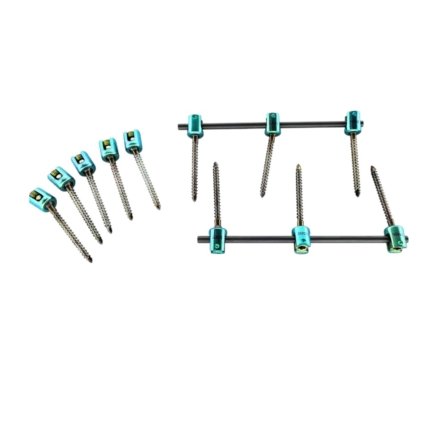
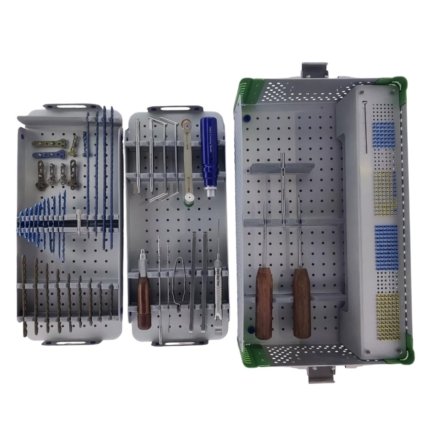
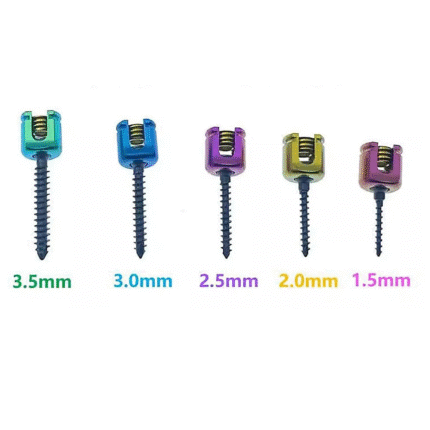
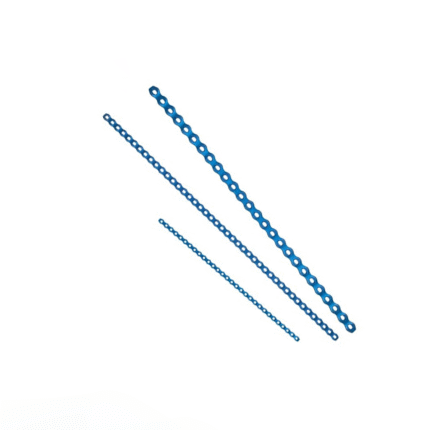
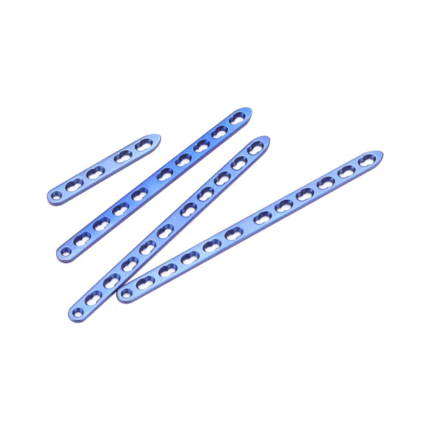
The LCP 2.7mm Distal Radius Volar Variable Angle Plate Set – Includes Instruments & Screws Titanium is a specialized orthopedic implant and instrumentation system intended for selected distal radius fracture fixation procedures. It combines a volar plate configuration with compatible titanium screws and surgical instruments, providing a coordinated solution for orthopedic teams managing fractures of the distal radius.
The volar plate is designed to sit along the palmar aspect of the distal radius, while the variable-angle screw holes allow compatible locking screws to be positioned within the permitted angular range of the plate system. This flexibility can be useful when fixation requires adaptation to the patient’s fracture pattern and available bone. The exact plate geometry, hole configuration, screw sizes, and permitted angulation should always be verified against the specific system specifications.
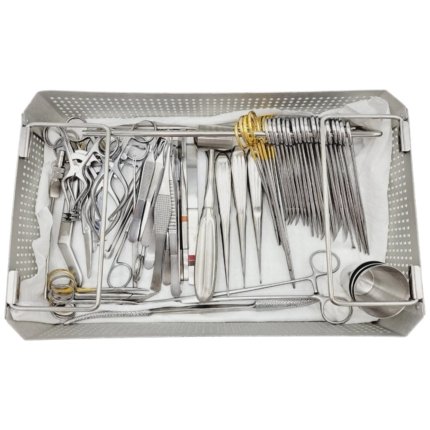
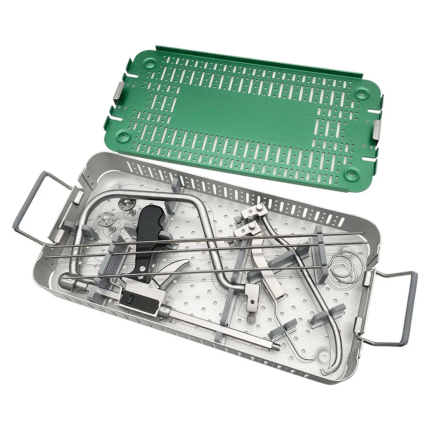
A complete set can simplify operating-room preparation by bringing the required fixation components and supporting instruments together in an organized configuration. Depending on the supplied contents, instrumentation may include drill guides, drills, depth gauges, screwdrivers, handles, and other tools used for preparation and insertion of compatible fixation components. The exact contents of the set should be confirmed before purchase or use.
The 2.7 mm designation identifies the compatible screw/plate system size and should not be interpreted as a universal measurement for every component in the set. Titanium construction provides a lightweight implant material commonly used in orthopedic fixation systems. The specific titanium grade, mechanical properties, surface finish, and implant specifications should be confirmed from the product documentation supplied with the system.
This distal radius volar plate set is intended for professional orthopedic use in appropriately selected fracture fixation procedures. It may be considered for distal radius fractures where a compatible volar locking plate construct is indicated. Patient anatomy, fracture characteristics, bone quality, and the surgeon’s selected fixation strategy determine whether a particular plate configuration is appropriate.
The included instruments are designed to support controlled preparation and placement of the compatible implants. Proper instrument selection and use are important because drills, guides, depth gauges, taps, and screwdrivers must correspond to the fixation system. Instruments should be inspected before use for wear, damage, corrosion, alignment, and proper function.
When supplied as reusable instruments, the instruments should be cleaned, inspected, and sterilized according to validated manufacturer instructions and applicable healthcare-facility protocols. Implant components should be handled according to their labeling and sterile-processing requirements. The titanium plates and screws are implant components and should only be used according to applicable product documentation and professional clinical judgment.
Key Features
- 2.7 mm distal radius volar fixation system
- Variable-angle locking plate design
- Designed for selected distal radius fracture fixation
- Volar plate configuration for wrist fracture applications
- Titanium plate and screw construction as specified
- Includes compatible fixation screws
- Includes supporting orthopedic surgical instruments
- Supports drilling, measuring, and screw insertion
- Variable-angle screw positioning within system specifications
- Organized set for operating-room preparation
- Designed for use with compatible components from the same system
- Professional orthopedic trauma application
Product Specifications
| Specification | Details |
|---|---|
| Product Type | Distal Radius Volar Plate Set |
| Plate Type | Variable Angle Locking Plate |
| System Size | 2.7 mm |
| Anatomical Application | Distal Radius / Wrist |
| Plate Position | Volar |
| Implant Material | Titanium |
| Screw Material | Titanium, according to supplied configuration |
| Included Components | Plates, Screws & Instruments |
| Fixation Type | Variable-Angle Locking Fixation |
| Intended Application | Selected Distal Radius Fracture Fixation |
| Instrumentation | Compatible Plate/Screw Instruments |
| Reusable Instruments | According to individual instrument labeling |
| Sterilization | Follow validated manufacturer instructions |
| Compatibility | Verify all components within the supplied system |
FAQs
What is a 2.7 mm distal radius volar plate?
A 2.7 mm distal radius volar plate is an orthopedic fixation plate designed for selected fractures of the distal radius. The plate is positioned on the volar side of the wrist and uses compatible screws for fixation.
What does variable angle mean on a distal radius plate?
Variable-angle technology allows compatible locking screws to be inserted at different permitted trajectories within the plate’s specified angular range, providing flexibility in screw positioning.
What is included in this distal radius plate set?
This set is described as including titanium plates, screws, and supporting surgical instruments. Exact quantities, sizes, and instrument contents should be confirmed from the specific set configuration.
Is the plate made from titanium?
Yes. The product is specified as a titanium distal radius volar plate system. The exact titanium grade should be confirmed from the manufacturer’s product documentation.
What is the 2.7 mm size referring to?
The 2.7 mm designation refers to the size classification of the compatible fixation system and screws. It should not be assumed to represent the thickness of every plate component.
What is this plate set used for?
It is intended for selected orthopedic fixation procedures involving distal radius fractures where a compatible volar variable-angle locking plate system is appropriate.
Are the included instruments reusable?
Reusable status depends on the individual instrument and its labeling. Reusable instruments should be cleaned, inspected, and sterilized according to validated manufacturer instructions.
Can these screws be used with any 2.7 mm plate?
No. Locking screws should be used only with plates and systems for which they are specified as compatible. Component dimensions, thread design, locking mechanism, and system specifications should be verified before use.





Reviews
There are no reviews yet.