
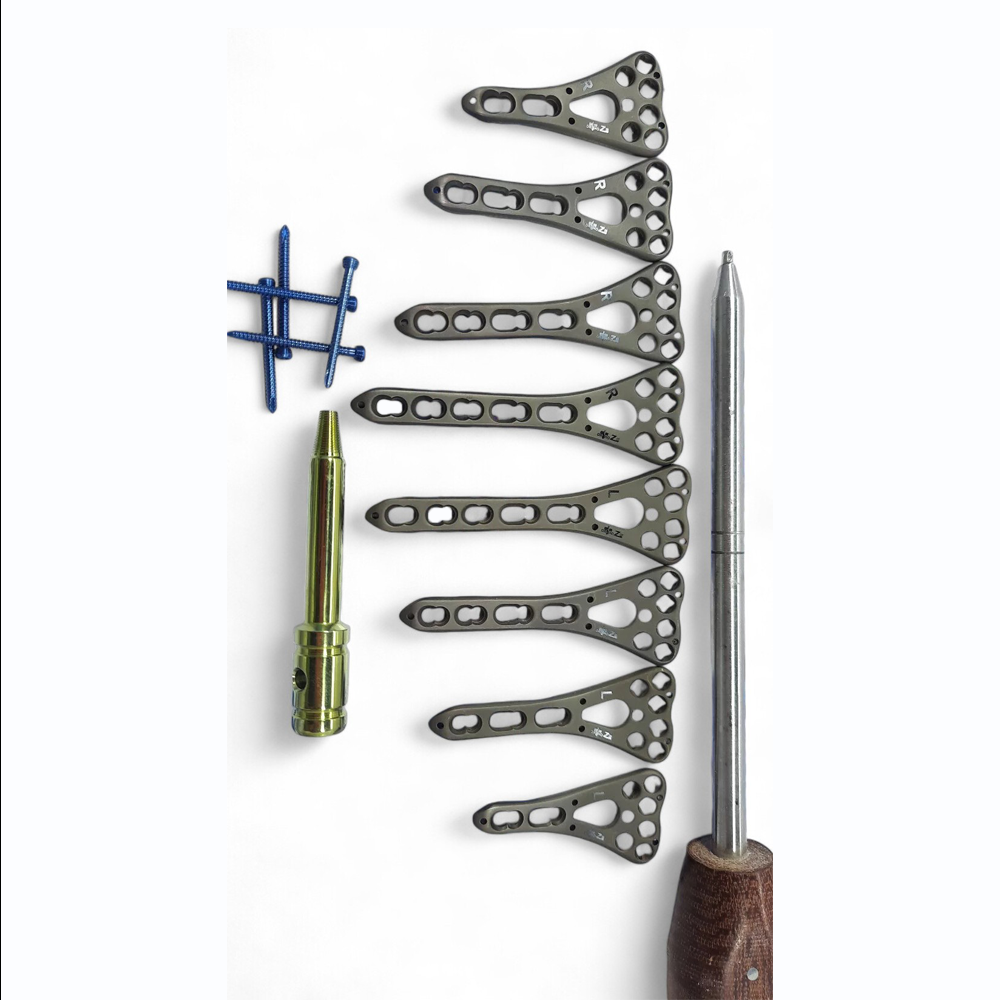
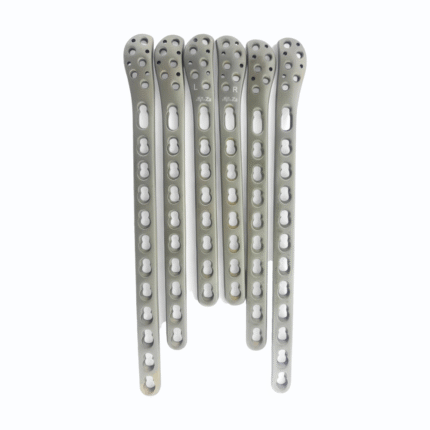
The Variable Angle Distal Radius Volar Plate Titanium is an orthopedic fixation implant designed for stabilization of appropriately selected distal radius fractures. Its volar anatomical configuration is intended to provide fixation along the palmar aspect of the distal radius, while the variable-angle locking interface allows compatible screws to be positioned within the manufacturer’s specified angular range.
Distal radius fractures are among the most common upper-extremity fractures and can involve the metaphysis, articular surface, or both. Fracture patterns may range from relatively simple extra-articular injuries to complex intra-articular, displaced, and comminuted fractures. A dedicated distal radius volar locking plate provides a fixation option for selected fractures where operative stabilization is clinically indicated.
The volar plate design is intended to follow the anatomical region of the distal radius and provide a platform for fixation of the distal fracture fragments. Volar fixation can offer a practical surgical approach while positioning the plate on the palmar surface of the wrist. Correct positioning remains essential because the distal radius has a complex anatomy and important tendons, nerves, vessels, and the radiocarpal joint are located near the implant.
The variable-angle locking technology allows compatible locking screws to be inserted at different permitted trajectories rather than being restricted to a single fixed screw axis. This can provide greater flexibility when targeting specific distal fragments and optimizing screw purchase. The exact permitted angular range, screw dimensions, and locking interface should be verified according to the manufacturer’s technical documentation.
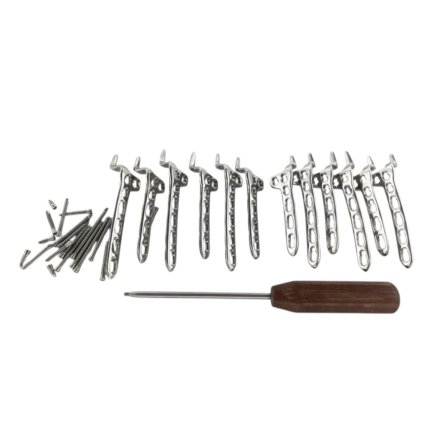
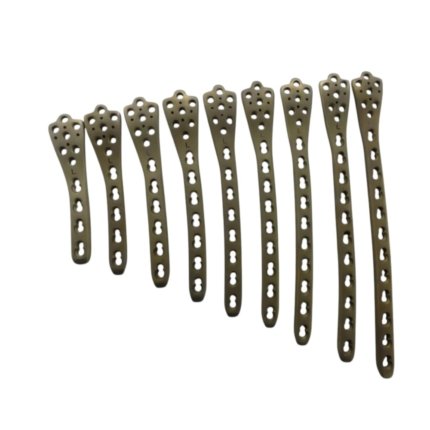
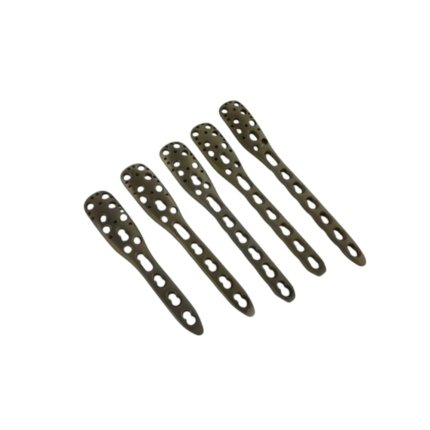
The plate is available in 2-, 3-, 4-, and 5-hole configurations and in left- and right-sided options. These configurations provide different fixation lengths and anatomical orientations. Shorter plates can be selected for appropriately localized fracture patterns, while longer configurations may provide additional fixation points where a broader construct is required. Plate selection should be based on fracture morphology, patient anatomy, bone quality, and the surgeon’s fixation strategy.
Manufactured from titanium, the plates provide material characteristics widely used in orthopedic implant applications. Titanium offers a favorable strength-to-weight ratio, corrosion resistance, and established biocompatibility. The precise titanium grade, mechanical properties, dimensions, and surface treatment should be confirmed through the manufacturer’s technical documentation.
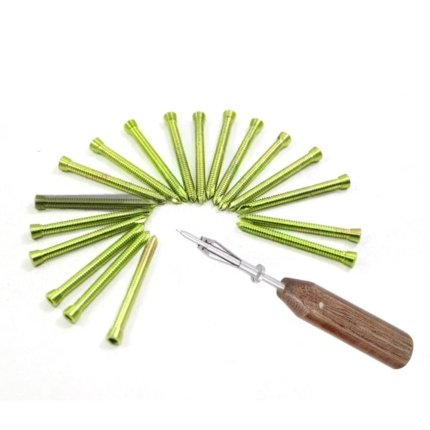
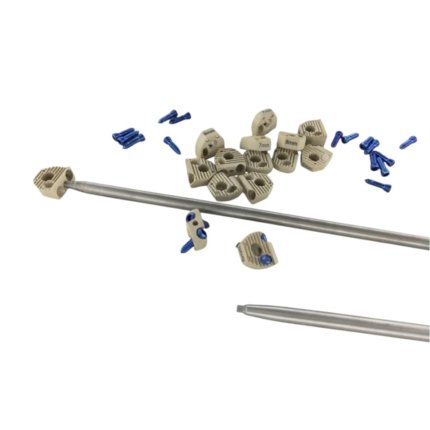
The included screws are intended for use with the corresponding variable-angle locking plate system. Screw diameter, length, head configuration, thread design, and locking compatibility must correspond to the plate. Screw positioning is particularly important in distal radius surgery because the articular surface and surrounding soft tissues are close to the implant.
The 79-piece selection provides multiple left- and right-sided plate configurations and associated screws. This range can support orthopedic trauma departments, hospitals, wrist surgery units, surgical centers, and medical implant suppliers requiring different distal radius fixation options.
Variable-angle volar locking plates may be considered for selected displaced, unstable, intra-articular, extra-articular, comminuted, or osteoporotic distal radius fractures requiring operative fixation. They may also be considered in other appropriately selected distal radius fracture patterns where stable volar fixation is indicated. Final treatment selection should be based on clinical examination, imaging, fracture classification, bone quality, soft-tissue condition, and surgeon judgment.
Accurate fracture reduction and plate positioning are essential. The surgeon should use appropriate imaging and compatible system-specific instrumentation, including drills, variable-angle guides, depth gauges, screwdrivers, and reduction instruments. Screw length and trajectory should be carefully assessed to avoid unintended penetration of the radiocarpal or distal radioulnar joint.
The implant should be handled carefully to prevent contamination, scratches, deformation, or damage to the variable-angle locking interface. Plate bending or modification should only be performed if specifically permitted by the manufacturer. Improper modification may affect the locking mechanism and structural performance.
Sterility, packaging, storage, and processing requirements depend on the manufacturer’s product labeling. Reusable surgical instruments should be cleaned, inspected, packaged, and sterilized using validated healthcare-facility procedures according to applicable manufacturer instructions.
With 2–5 hole configurations, left- and right-sided options, variable-angle locking technology, titanium construction, included screws, and a 79-piece selection, this distal radius volar plate system provides a versatile fixation option for appropriately selected wrist fracture procedures.
Key Features
- Designed for distal radius fracture fixation.
- Anatomical volar distal radius plate configuration.
- Variable-angle locking technology for flexible screw trajectories.
- Available in 2, 3, 4, and 5-hole configurations.
- Left and right anatomical options.
- Manufactured from titanium.
- Compatible screws included.
- Supports angular-stable fixation when properly assembled.
- Suitable for selected intra-articular and extra-articular distal radius fractures.
- Multiple configurations accommodate different fracture patterns.
- 79-piece selection provides multiple plate and screw options.
- Requires compatible variable-angle locking instrumentation.
Product Specifications
| Specification | Details |
|---|---|
| Product Name | Locking Variable Angle Distal Radius Volar Plate |
| Anatomical Site | Distal Radius / Wrist |
| Plate Position | Volar |
| Plate Type | Variable-Angle Locking Plate |
| Hole Options | 2, 3, 4 & 5 Holes |
| Side Options | Left & Right |
| Material | Titanium |
| Screws | Included |
| Quantity | 79 Pieces |
| Fixation Type | Variable-Angle Locking / Angular-Stable |
| Primary Application | Distal Radius Fracture Fixation |
| Surgical Specialty | Orthopedic Trauma / Hand & Wrist Surgery |
| Intended Use | Professional orthopedic surgical applications |
| Instrument Compatibility | Use compatible variable-angle locking instrumentation |
| Sterilization | Follow product-specific manufacturer instructions and validated protocols |
FAQs
1. What is a Variable Angle Distal Radius Volar Plate?
It is an orthopedic locking plate designed for selected distal radius fractures. Its volar configuration positions the plate on the palmar side of the distal radius, while the variable-angle locking interface allows compatible screws to be inserted at permitted trajectories.
2. What hole configurations are available?
The product includes 2-, 3-, 4-, and 5-hole configurations, providing different plate lengths and fixation options.
3. Are left and right plates available?
Yes. The system includes left and right configurations to correspond with the patient’s distal radius anatomy.
4. What material are the plates made from?
The plates are manufactured from titanium, a material commonly used for orthopedic implants due to its favorable strength-to-weight characteristics, corrosion resistance, and biocompatibility.
5. What is variable-angle locking?
Variable-angle locking allows compatible screws to engage the plate’s threaded holes at different permitted trajectories within the manufacturer’s specified angular range. This provides flexibility for targeting selected fracture fragments.
6. Are screws included?
Yes. The product title specifies that the plates are supplied with screws. Exact screw quantities, lengths, and diameters should be verified from the manufacturer’s set configuration.
7. What types of distal radius fractures can these plates be used for?
They may be considered for selected displaced, unstable, intra-articular, extra-articular, comminuted, and osteoporotic distal radius fractures requiring operative fixation.
8. Why is screw trajectory important in distal radius fixation?
The distal radius is close to the radiocarpal and distal radioulnar joints as well as important surrounding soft tissues. Proper screw length and trajectory help avoid unintended joint penetration and support appropriate fixation.


Reviews
There are no reviews yet.