

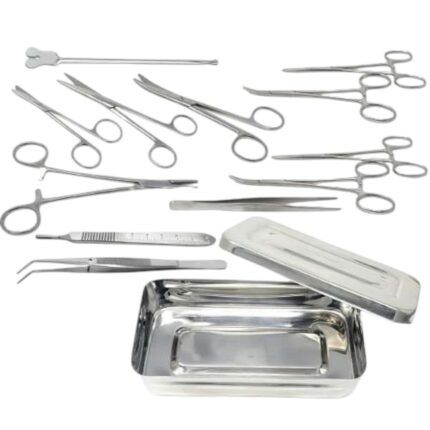
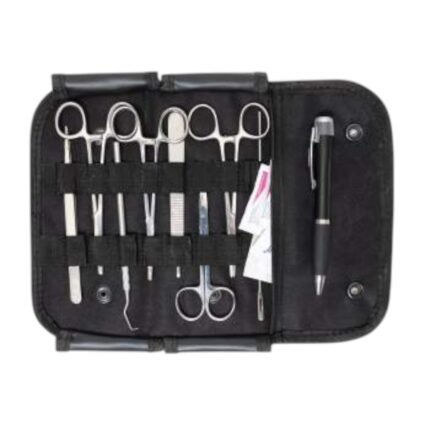
The Minor Surgery Set is a versatile collection of essential surgical instruments designed to support minor surgical procedures in hospitals, clinics, outpatient centers, physician offices, and other professional healthcare environments. The set brings commonly required surgical tools together in one organized configuration, helping healthcare professionals prepare efficiently for procedures involving soft tissue, wound management, tissue removal, and surgical closure.
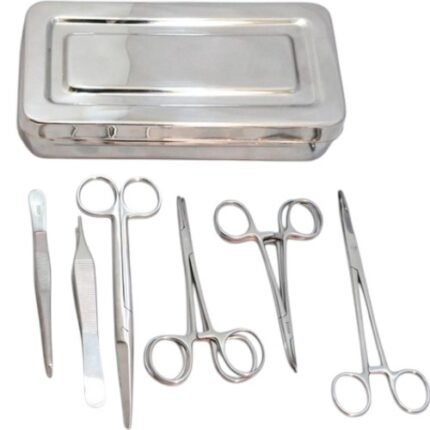
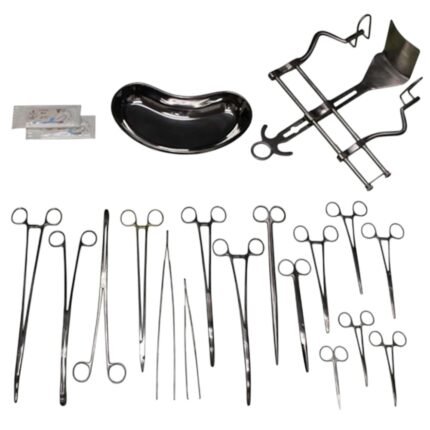
Depending on the specific configuration, a minor surgery instrument set may include surgical scissors, tissue forceps, dressing forceps, hemostatic clamps, needle holders, scalpel handles, probes, retractors, and other basic surgical instruments. The exact number, design, and dimensions of instruments vary by manufacturer and set configuration, so the supplied product list should be reviewed before purchase.
The instruments are intended to support fundamental surgical tasks. Tissue forceps can provide controlled grasping and manipulation, while scissors may be used for cutting or soft tissue dissection. Hemostatic instruments can assist with temporary clamping of vessels or tissue structures when clinically appropriate. Needle holders are designed to provide controlled handling of suture needles during wound closure, while retractors may assist with maintaining suitable exposure of the operative field.
A basic minor surgery set can be useful for procedures where a complete specialty-specific instrument inventory is not required. Depending on the included instruments and clinical requirements, it may support selected procedures such as wound repair, soft tissue excision, minor lesion procedures, drainage procedures, biopsies, and other minor surgical interventions. The suitability of individual instruments depends on the procedure and the judgment of the qualified healthcare professional.
Reusable surgical instruments are commonly manufactured from surgical stainless steel or other suitable medical-grade materials. Stainless steel provides durability and resistance to corrosion when instruments are appropriately cleaned, maintained, and sterilized. Properly finished surfaces can also make routine inspection and cleaning more manageable.
Instrument ergonomics and working-end design are important for reliable handling. Forceps should provide appropriate grip, scissors should operate smoothly, and hinged or ratcheted instruments should open, close, lock, and release correctly. Regular inspection can help identify worn joints, damaged tips, corrosion, misalignment, or other conditions that may affect intended performance.
The Minor Surgery Set can be suitable for general practitioners, outpatient surgical departments, dermatology clinics, minor procedure rooms, ambulatory surgical centers, hospitals, and other professional medical facilities. Its compact configuration can help simplify instrument organization and preparation for routine minor procedures.
After use, reusable instruments should be cleaned promptly according to validated procedures. Hinges, serrations, joints, and narrow working areas should receive appropriate attention during cleaning. Instruments should then be inspected for cleanliness, damage, corrosion, alignment, and mechanical function before sterilization.
Sterilization should be performed using a validated process appropriate for the individual instruments and consistent with manufacturer instructions and healthcare facility protocols. Instruments that are damaged or unable to perform their intended function should be removed from service until appropriately evaluated.
The Minor Surgery Set provides a practical foundation for facilities seeking a reliable collection of basic surgical instruments. Before ordering, buyers should verify the exact instrument list, quantity, dimensions, material, reusable status, and intended applications to ensure the set matches their clinical requirements.
Key Features
- Practical set for minor surgical procedures
- Designed for professional clinical environments
- Supports tissue grasping and manipulation
- Suitable for cutting and soft tissue dissection
- Includes instrument types for hemostatic control
- Supports suturing and wound closure
- May include retractors for surgical exposure
- Commonly manufactured from surgical stainless steel
- Durable construction for routine professional use
- Suitable for clinics, hospitals, and outpatient centers
- Compact configuration simplifies surgical preparation
- Reusable depending on individual instrument specifications
Product Specifications
| Specification | Details |
|---|---|
| Product Name | Minor Surgery Set |
| Product Category | Basic Surgical Instrument Set |
| Specialty | General / Minor Surgery |
| Primary Application | Minor Surgical Procedures |
| Instrument Functions | Grasping, Cutting, Dissection, Hemostasis & Suturing |
| Instrument Types | Configuration Dependent |
| Material | Surgical Stainless Steel, configuration dependent |
| Set Quantity | Configuration Dependent |
| Instrument Sizes | Various |
| Reusable | Depending on Individual Instrument |
| Intended Users | Qualified Healthcare Professionals |
| Clinical Setting | Clinics, Hospitals & Surgical Centers |
| Sterilization | Follow Manufacturer-Validated Instructions |
FAQs
1. What is a Minor Surgery Set?
A Minor Surgery Set is a collection of essential surgical instruments designed to support routine minor procedures involving tissue handling, cutting, dissection, hemostasis, and wound closure.
2. What instruments are included in a minor surgery set?
The contents vary by configuration but may include tissue forceps, dressing forceps, scissors, hemostatic clamps, needle holders, scalpel handles, probes, and retractors.
3. What procedures can a Minor Surgery Set support?
Depending on its contents, the set may support selected minor procedures such as wound repair, soft tissue procedures, biopsies, lesion removal, drainage procedures, and other outpatient surgical applications.
4. What material are minor surgery instruments made from?
Reusable surgical instruments are commonly manufactured from surgical stainless steel or other suitable medical-grade materials. Exact specifications depend on the manufacturer.
5. Is the Minor Surgery Set reusable?
If the individual instruments are designated as reusable, they can be cleaned, inspected, maintained, and sterilized according to validated manufacturer instructions.
6. Can this set be used in an outpatient clinic?
Yes. A properly configured minor surgery set can be suitable for outpatient clinics, procedure rooms, ambulatory surgical centers, and other professional healthcare facilities.
7. How should minor surgical instruments be sterilized?
Reusable instruments should be thoroughly cleaned and inspected before sterilization. Processing should follow the manufacturer’s validated instructions and the healthcare facility’s established sterilization protocols.
8. Who can use a Minor Surgery Set?
The instruments are intended for appropriately trained and qualified healthcare professionals working within suitable clinical environments.
9. What should I check before purchasing a minor surgery set?
Check the exact instrument list, quantity, sizes, material, working-end patterns, reusable status, and intended applications to ensure the configuration meets your clinical requirements.




Reviews
There are no reviews yet.