
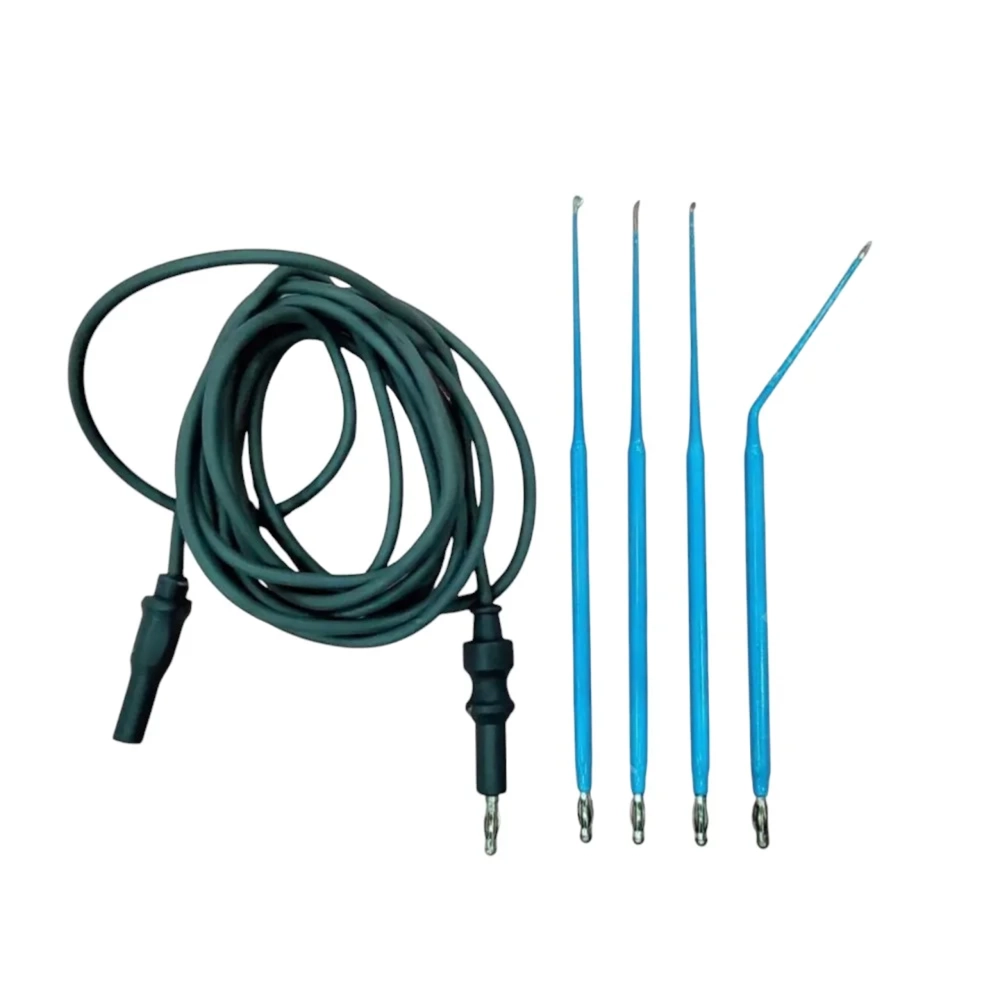
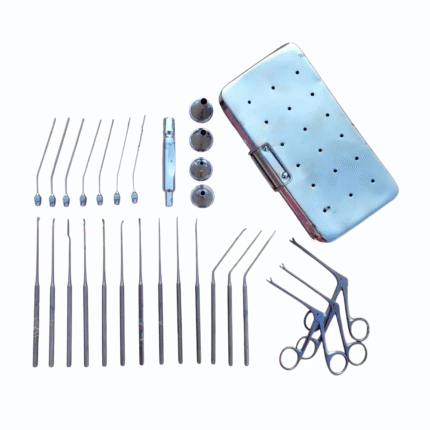
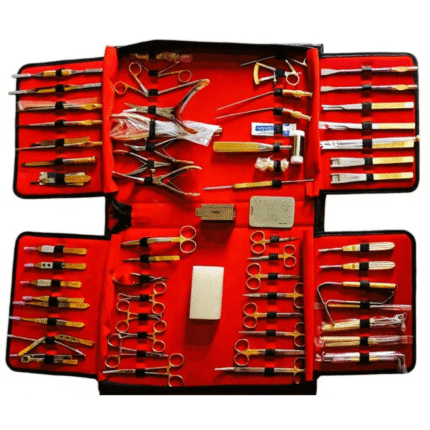
The Monopolar Shea Ear Operation Micro Repositor Set – Endoscopic Ear Surgery Electro is designed for professional otologic procedures requiring fine instrument control within the narrow anatomy of the external and middle ear. Shea-style micro instruments are associated with ear surgery where precise manipulation, controlled dissection, and access to small anatomical structures are essential.
The term micro repositor is used for fine ear-surgery instruments intended to assist with tissue elevation, repositioning, separation, or controlled manipulation according to the specific working-end design. In a microsurgical environment, a narrow instrument profile can help the surgeon work through confined operative spaces while maintaining visualization through an operating microscope or endoscope.
The monopolar configuration adds an electrosurgical function to the instrument system. Monopolar electrosurgery uses electrical energy delivered through an active electrode, with the current returning through a patient return electrode. The exact electrosurgical application, generator compatibility, insulation requirements, and operating parameters must be confirmed for the specific instrument and system.
This type of instrument set can be relevant to endoscopic ear surgery, otologic surgery, tympanoplasty, myringoplasty, middle-ear procedures, and other selected ENT operations where delicate tissue manipulation is required. The precise role of each instrument depends on its shape, tip, shaft, and whether it is intended for mechanical manipulation or electrosurgical use.
The micro-scale design is particularly useful in ear surgery because the operative anatomy contains small and delicate structures. Fine working ends can provide controlled access without unnecessarily occupying the visual field. Instrument selection should be based on the anatomical target and the specific surgical technique used by the otologic or ENT surgeon.
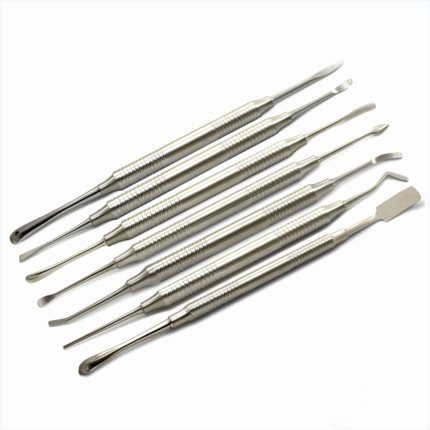
Depending on the configuration, a Shea ear operation set may include specialized needles, hooks, elevators, curettes, probes, knives, or other micro instruments. Comparable Shea micro-repositor listings document combinations including Wullstein needles, a micro hook, Beales raspatory, Rosen curette, ball probe, cutting knives, and elevators. Exact contents vary by set, so the components supplied with this product should be verified before purchase or clinical use.
The endoscopic ear surgery application makes instrument profile especially important. Long, slender shafts and carefully shaped working ends can allow instruments to pass alongside an endoscope while maintaining access to the operative site. Some procedures may instead be performed under microscopic visualization depending on the surgeon’s technique and the clinical setting.
Proper handling is important for both mechanical and electrosurgical components. Fine tips should be protected from impact and bending, while insulated or electrically active components should be checked for damage before use. Monopolar instruments should only be connected to compatible electrosurgical equipment and used according to the manufacturer’s instructions.
The product is associated with a Monopolar Shea configuration and documented listings identify it for ear operation, micro-repositor use, endoscopic ear surgery, and electrosurgery. One current listing identifies the model as PS-31.
Before each procedure, the instruments should be inspected for tip integrity, shaft alignment, surface condition, insulation where applicable, connector condition, and overall mechanical function. Any component showing cracks, exposed conductive surfaces, deformation, corrosion, or other damage should be removed from service until appropriately evaluated.
For reusable surgical instruments, cleaning, disinfection, sterilization, and maintenance must follow validated instructions for the exact components. Electrosurgical instruments may have specific requirements relating to insulation, connectors, and cleaning methods. Instruments should never be processed using a method that could compromise their electrical or mechanical characteristics.
The Monopolar Shea Micro Repositor Set for Ear Surgery is suitable for ENT departments, otology units, ear surgery centers, hospitals, and specialty operating rooms requiring precision instruments for delicate otologic procedures. Its micro-instrument format is intended to support controlled tissue handling and selected electrosurgical workflows in confined ear-surgery fields.
Key Features
- Specialized Shea micro instrument set for ear surgery
- Monopolar configuration for selected electrosurgical applications
- Designed for otologic and ENT procedures
- Suitable for endoscopic ear surgery
- Fine instruments for controlled tissue manipulation
- Supports delicate dissection and tissue elevation
- Useful for selected middle-ear procedures
- Slender profiles support access within confined operative fields
- Suitable for microscope- or endoscope-assisted procedures
- Fine working ends require careful protection and inspection
- Electrical components require compatible electrosurgical equipment
- Reprocessing must follow validated manufacturer instructions
Product Specifications
| Specification | Details |
|---|---|
| Product Name | Monopolar Shea Ear Operation Micro Repositor Set |
| Product Type | Micro Otologic / ENT Surgical Instrument Set |
| Primary Specialty | ENT / Otology |
| Surgical Application | Ear Surgery / Endoscopic Ear Surgery |
| Electrosurgical Configuration | Monopolar |
| Primary Function | Tissue Manipulation, Dissection and Selected Electrosurgery |
| Instrument Profile | Micro / Fine |
| Possible Instrument Types | Repositors, Hooks, Needles, Elevators, Curettes, Probes, Configuration Dependent |
| Working End | Fine Otologic Profile |
| Shaft Design | Slender / Extended, Model Dependent |
| Model | PS-31, Per Documented Listing |
| Material | Surgical Instrument Material, Configuration Dependent |
| Electrical Compatibility | Compatible Electrosurgical System Required |
| Reusable | Component Specific |
| Sterilization | Follow Validated Reprocessing Instructions |
| Contents | Verify Exact Set Configuration Before Use |
FAQs
What is the Monopolar Shea Micro Repositor Set used for?
It is designed for delicate ear and otologic procedures requiring fine surgical instruments for tissue manipulation, dissection, elevation, and selected monopolar electrosurgical applications.
What does “Shea” refer to in ear surgery instruments?
“Shea” is used in the naming of specialized otologic instruments associated with ear surgery. The product listing identifies this configuration as a Monopolar Shea micro-repositor set.
What is a micro repositor used for?
A micro repositor is a fine ear-surgery instrument used for controlled tissue elevation, repositioning, separation, or manipulation, depending on its specific working-end design.
What does monopolar mean?
Monopolar electrosurgery uses an active electrode at the surgical site and a separate patient return electrode to complete the electrical circuit.
Can this set be used for endoscopic ear surgery?
Yes. The product is specifically associated with endoscopic ear surgery and micro-repositor applications.
Which procedures may use Shea micro ear instruments?
Depending on the individual instrument, Shea-style micro instruments may support selected procedures such as tympanoplasty, myringoplasty, middle-ear surgery, and other otologic operations.
What instruments may be included in a Shea ear operation set?
Comparable documented sets may contain Wullstein needles, micro hooks, Beales raspatories, Rosen curettes, ball probes, cutting knives, and elevators. Exact contents vary by configuration.
Can the monopolar instruments be connected to any electrosurgical generator?
No. The instrument must be compatible with the intended electrosurgical generator, connector, electrical specifications, and applicable operating parameters.
Are these instruments suitable for microscopic ear surgery?
Appropriately configured micro ear instruments can support microscope-assisted otologic procedures. The choice between microscopic and endoscopic techniques depends on the procedure and surgeon’s technique.
Are the instruments reusable?
They may be reusable when specifically manufactured and labeled for repeated clinical use. Reusable components must be properly cleaned, inspected, sterilized, and maintained.
How should monopolar ear instruments be sterilized?
Cleaning and sterilization must follow validated instructions for the exact instruments. Insulated surfaces, connectors, and electrosurgical components should be processed in a way that does not compromise their electrical or mechanical properties.
What should be checked before using the set?
Inspect the working tips, shafts, insulation, connectors, and overall instrument condition. Electrically active components should also be checked for insulation damage and compatibility with the intended electrosurgical system.
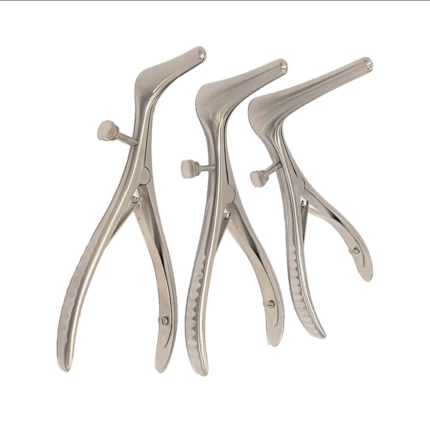

Reviews
There are no reviews yet.