
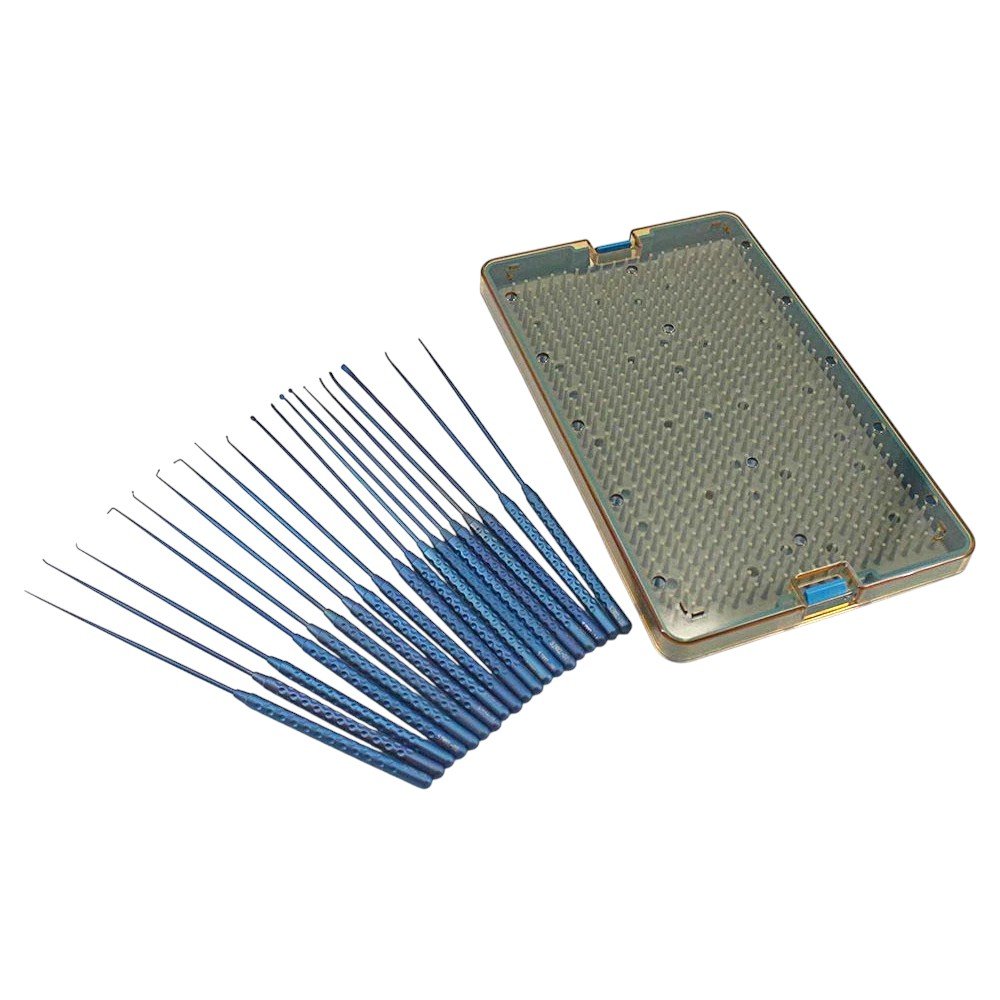
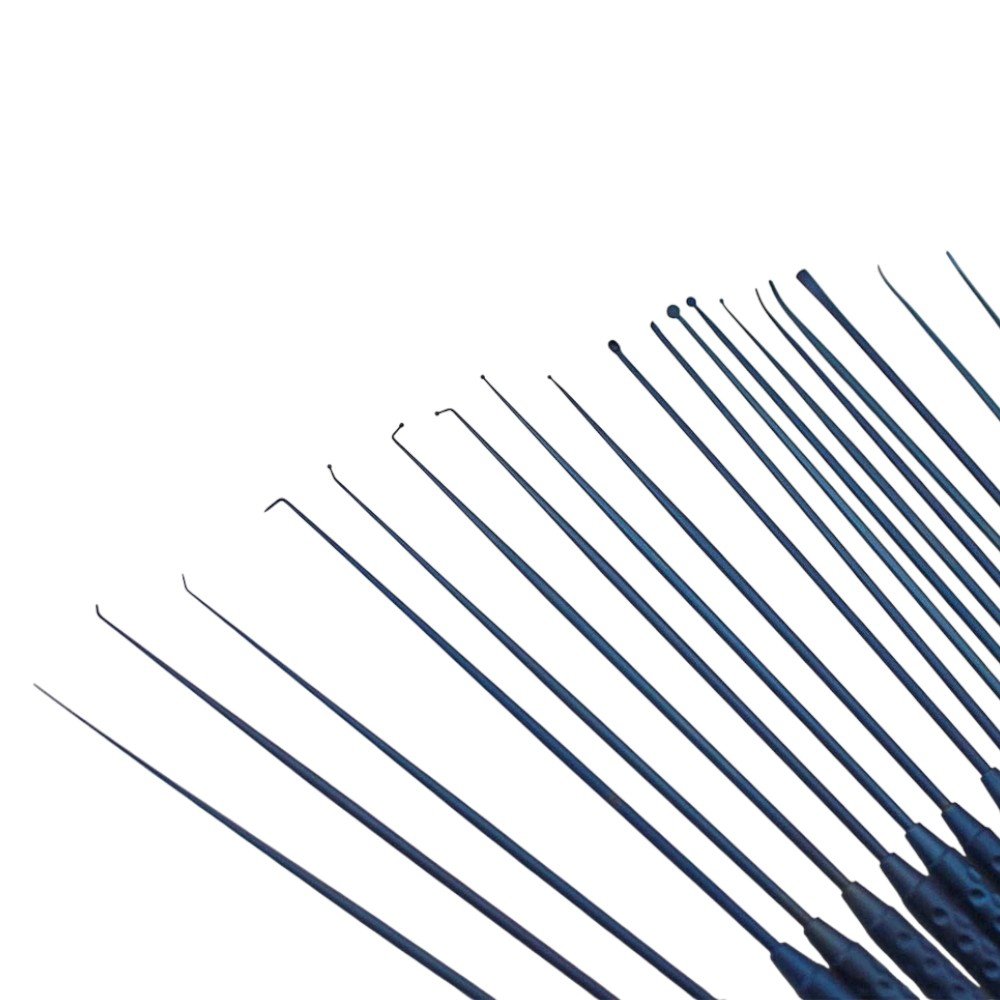


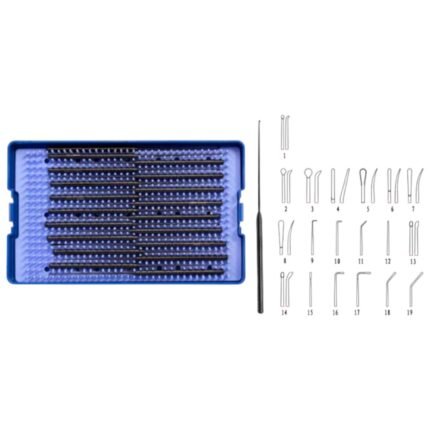
The Neurosurgery Instrument Set Micro Dissector Hook Curette with Sterilizing Case is designed for surgical teams performing delicate neurosurgical procedures that require fine instrument control. Micro dissectors, hooks, and curettes are commonly used for precise tissue manipulation and dissection in confined operative fields where conventional surgical instruments may be too large or less suitable.
A micro dissector is intended to provide controlled separation and manipulation of tissue. Depending on its working-end design, it may be used for blunt dissection, tissue mobilization, or gentle separation of anatomical structures. The fine profile of the instrument allows the surgeon to work with greater control during procedures performed under magnification.
The micro hook component can provide a pointed or curved working end suited to selected microsurgical maneuvers. Hooks may be used for delicate tissue manipulation, probing, or controlled separation according to their specific configuration. The precise shape and dimensions of the hook determine its intended application and should be reviewed before clinical use.
The curette instruments provide another working-end profile for controlled scraping, scooping, or tissue manipulation where appropriate. Neurosurgical curettes are commonly designed with specialized working tips and may be useful in procedures involving soft tissue or other structures requiring careful curettage. Exact applications depend on the individual curette design.
This combination of micro dissector, hook, and curette instruments provides useful versatility within a neurosurgical instrument tray. Instead of relying on a single instrument style, the surgical team can select a suitable working end based on anatomy, operative approach, tissue characteristics, and the particular surgical maneuver being performed.
The set may support selected intracranial, skull-base, vascular, tumor, and other microsurgical procedures. It can be particularly useful in operative fields where precise access and controlled movement are important. Exact clinical applications should always be determined by qualified surgical professionals according to the instrument design and established surgical technique.
Instrument length and shaft geometry can influence access to deeper or confined operative sites. Depending on the configuration, these instruments may feature slender or elongated shafts designed to provide reach while keeping the surgeon’s hand away from the immediate surgical field. Proper ergonomic handling is especially important when working under an operating microscope.
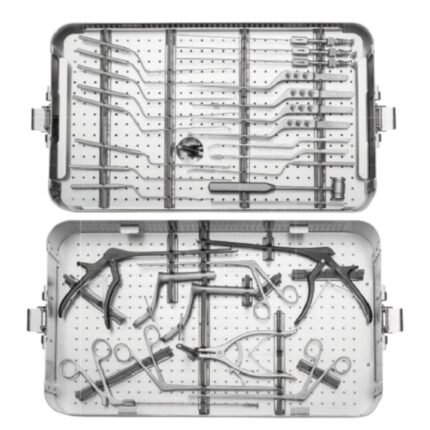
The included sterilizing case provides a dedicated method for organizing and protecting the instruments during storage and processing. Fine microsurgical instruments can be susceptible to damage from impact or contact with heavier tools. A suitable case can help separate the instruments and reduce the likelihood of bending or damaging delicate working ends.
Proper instrument handling remains essential. Micro tips, hooks, and curettes should not be subjected to excessive force or used outside their intended purpose. Before each procedure, all components should be inspected for bent tips, damaged working ends, corrosion, surface defects, shaft deformation, and other signs of wear.
For reusable surgical instruments, cleaning and sterilization should follow the validated instructions applicable to the exact instruments and case. Fine working ends, joints, connections, and other areas that may retain biological material should be thoroughly cleaned. The sterilizing case should only be processed using a method specifically approved for its material and construction.
The Neurosurgery Micro Dissector Hook Curette Instrument Set is suitable for neurosurgical operating rooms, microsurgery departments, specialty hospitals, skull-base surgery units, and other professional medical facilities requiring a dedicated collection of precision instruments for delicate surgical work.
Key Features
- Specialized neurosurgical micro instrument set
- Includes micro dissector, hook, and curette-style instruments
- Designed for delicate microsurgical procedures
- Supports controlled tissue dissection and manipulation
- Suitable for selected intracranial and skull-base procedures
- Useful for fine operative access in confined surgical fields
- Compatible with microscope-assisted surgical techniques, depending on procedure
- Fine working ends support precise surgical handling
- Includes a sterilizing and storage case
- Case helps organize and protect delicate instruments
- Working tips require careful inspection before use
- Reprocessing should follow validated manufacturer instructions
Product Specifications
| Specification | Details |
|---|---|
| Product Name | Neurosurgery Micro Dissector Hook Curette Instrument Set |
| Product Type | Microsurgical Neurosurgical Instrument Set |
| Primary Specialty | Neurosurgery |
| Instrument Categories | Micro Dissectors, Hooks, Curettes |
| Primary Function | Tissue Dissection and Microsurgical Manipulation |
| Surgical Applications | Intracranial, Skull-Base, Vascular, Microsurgical Procedures |
| Instrument Profile | Fine / Microsurgical |
| Shaft Design | Slender / Configuration Dependent |
| Working Ends | Dissector, Hook, Curette Profiles |
| Set Quantity | Configuration Dependent |
| Storage | Included Sterilizing Case |
| Material | Surgical Instrument Material, Configuration Dependent |
| Reusable | Depending on Individual Components |
| Sterilization | Follow Validated Reprocessing Instructions |
| Contents | Verify Exact Set Configuration Before Use |
FAQs
What is this neurosurgery instrument set used for?
The set is designed for delicate neurosurgical and microsurgical procedures requiring controlled tissue dissection, manipulation, probing, and curettage with fine working-end instruments.
What instruments are included in the set?
The set includes micro dissector, hook, and curette-style instruments. Exact quantities, dimensions, and individual tip configurations should be verified against the supplied set inventory.
What is a micro dissector used for?
A micro dissector is used for controlled tissue separation and manipulation during delicate surgical procedures. Its exact function depends on the design of the working end.
What is a neurosurgical micro hook used for?
A micro hook can be used for selected tissue manipulation, probing, or controlled separation in confined surgical fields, depending on its tip shape and intended application.
What is a neurosurgical curette used for?
A neurosurgical curette is used for controlled scraping, scooping, or tissue manipulation where the specific curette design is appropriate for the procedure.
Can this set be used for brain surgery?
Appropriately configured instruments may support selected intracranial procedures where fine tissue handling and controlled microsurgical manipulation are required.
Is this set suitable for skull-base surgery?
Micro dissectors, hooks, and curettes may be useful in selected skull-base procedures where access to confined anatomical areas and precise tissue handling are important.
Does the set include a sterilizing case?
Yes. The product includes a sterilizing and storage case intended to help organize and protect the surgical instruments.
Are these neurosurgical instruments reusable?
They may be reusable when supplied and labeled for repeated clinical use. Reusable components must be properly cleaned, inspected, sterilized, and maintained.
How should micro neurosurgical instruments be stored?
Fine instruments should be secured in an appropriate case or tray that protects their working ends from impact, bending, and contact with heavier surgical instruments.
How should the instruments and case be sterilized?
Cleaning and sterilization should follow validated instructions for the exact instruments and case materials. The approved processing method should be confirmed before reprocessing.
What should be inspected before using the set?
Each instrument should be examined for tip alignment, working-end integrity, shaft condition, corrosion, surface damage, and proper overall function before clinical use.





Reviews
There are no reviews yet.