

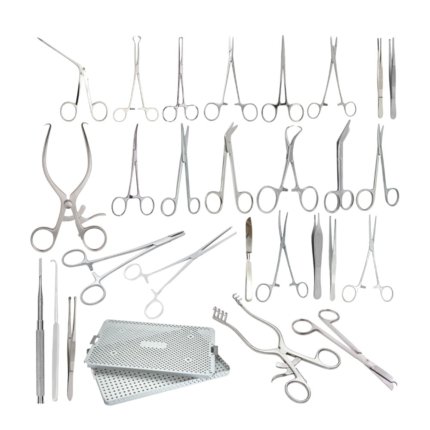
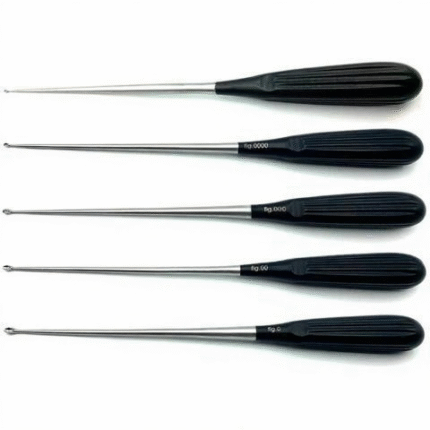
The Neurosurgery & Maxillofacial Surgery Instruments – CMF Device Anatomical Orbital Floor Plates and Screws are specialized fixation components designed for orbital reconstruction and craniofacial surgery. Orbital floor implants are used to restore structural support following traumatic fractures or surgical reconstruction involving the orbital floor and adjacent facial anatomy.
Orbital floor reconstruction requires careful restoration of the bony contour while maintaining appropriate support for the orbital contents. An anatomically shaped plate is designed to follow the general contour of the orbital region, helping the surgeon position the implant within the reconstructed area. The exact shape and dimensions of the plate vary according to the specific implant design and intended anatomical application.
The accompanying bone screws are used to secure the plate to suitable areas of intact facial or orbital bone. Screw length, diameter, head configuration, and thread design must be appropriate for the selected plate and the patient’s anatomy. Compatibility between the plate and screw system should always be confirmed before clinical use.
These CMF fixation components can be relevant to orbital floor fracture repair, orbital wall reconstruction, facial trauma surgery, and selected craniofacial reconstructive procedures. They may be used by qualified maxillofacial, plastic, craniofacial, or neurosurgical teams depending on the operative anatomy and institutional practice.
Anatomical contouring is particularly important in orbital surgery because the reconstructed orbital floor contributes to the position and support of the orbital contents. Proper implant placement is determined by the surgeon based on preoperative imaging, fracture pattern, available bone, anatomical landmarks, and the specific reconstruction technique.
The plate profile is intended to provide fixation while maintaining an appropriate low-profile presence within the surgical site. Depending on the individual design, the plate may incorporate multiple fixation holes to permit placement of screws according to the reconstruction requirements. Exact hole pattern, contour, thickness, and dimensions are product-specific and should be confirmed before use.
The screw system provides mechanical fixation between the implant and supporting bone. During implantation, the surgeon determines the appropriate screw location and length based on the patient’s anatomy and the characteristics of the implant system. Proper drilling, screw selection, and fixation technique are essential to avoid damage to surrounding structures.
The CMF orbital floor plate and screw system may be incorporated into a broader cranio-maxillofacial fixation system. Some systems offer multiple plate shapes and screw sizes to accommodate different facial anatomy and fracture patterns. The exact component configuration should therefore be reviewed carefully before selecting implants for a particular procedure.
Unlike reusable surgical instruments, implant plates and screws may have specific requirements concerning sterility, packaging, single-use status, and handling. These requirements are product-specific. Users should verify the manufacturer’s labeling and applicable instructions regarding sterilization, reuse, storage, and implantation before clinical application.
Careful inspection is also important before implantation. Plates should be examined for deformation, surface damage, contamination, or other defects, while screws should be checked for thread integrity and appropriate interface condition. Damaged or compromised implants should not be used.
The CMF Anatomical Orbital Floor Plates and Screws provide a specialized solution for orbital reconstruction and facial fixation procedures. Their purpose is to support stable reconstruction of the orbital floor and restoration of facial skeletal anatomy using compatible plate-and-screw fixation.
Key Features
- Anatomical orbital floor plate design
- Designed for CMF and maxillofacial reconstruction
- Suitable for orbital floor fracture repair
- Supports orbital wall and craniofacial reconstruction
- Compatible fixation screws for plate stabilization
- Contoured profile designed for orbital anatomy
- Useful in selected facial trauma procedures
- Supports controlled bone fixation and reconstruction
- Suitable for neurosurgical and maxillofacial surgical environments
- Multiple fixation holes may allow flexible screw positioning
- Exact plate and screw dimensions are configuration dependent
- Sterility, reuse, and implantation requirements must follow applicable product instructions
Product Specifications
| Specification | Details |
|---|---|
| Product Name | CMF Anatomical Orbital Floor Plates and Screws |
| Product Category | Cranio-Maxillofacial Fixation System |
| Primary Specialty | Maxillofacial / Craniofacial / Neurosurgery |
| Primary Application | Orbital Floor Reconstruction |
| Implant Type | Anatomical Plate and Bone Screws |
| Plate Design | Anatomically Contoured |
| Surgical Use | Orbital Fracture and Facial Reconstruction |
| Fixation Method | Bone Screw Fixation |
| Screw Configuration | System Dependent |
| Plate Dimensions | Model / Configuration Dependent |
| Plate Thickness | Configuration Dependent |
| Material | Implant-Grade Material, Product Specific |
| Sterility | Verify Product Labeling |
| Reuse | Implant-Specific; Follow Manufacturer Instructions |
| Compatibility | Use Only With Compatible Components |
| Packaging | Product Configuration Dependent |
FAQs
What are anatomical orbital floor plates used for?
Anatomical orbital floor plates are used to reconstruct and stabilize the orbital floor after fractures or other defects requiring surgical reconstruction.
What is the purpose of the screws?
The screws secure the orbital plate to appropriate areas of supporting bone, providing fixation of the implant during reconstruction.
Can these plates be used for orbital floor fractures?
Yes. Appropriately designed orbital floor plates are used in selected orbital fracture reconstruction procedures, depending on fracture location and patient anatomy.
Are these implants used in maxillofacial surgery?
Yes. Orbital floor plates and screws are commonly relevant to cranio-maxillofacial and facial trauma reconstruction procedures.
Can neurosurgeons use orbital floor fixation systems?
Orbital and craniofacial reconstruction may involve multidisciplinary surgical teams, including appropriately trained neurosurgical, maxillofacial, plastic, or craniofacial specialists depending on the anatomy and procedure.
What does “anatomical” mean for an orbital floor plate?
An anatomical plate is shaped or contoured to correspond more closely to the general geometry of the intended anatomical region, potentially reducing the need for intraoperative contouring.
Are the screws compatible with any orbital plate?
No. Screws should be compatible with the specific plate and fixation system. Screw diameter, head design, thread characteristics, and length should be verified before use.
What material are orbital floor plates and screws made from?
The exact implant material depends on the specific product system. The manufacturer’s product documentation should be consulted for the precise alloy or implant material.
Are orbital floor plates and screws reusable?
Implant reuse should not be assumed. Sterility, single-use status, reprocessing, and reuse requirements must be determined from the manufacturer’s labeling and applicable instructions.
What should be checked before implantation?
Inspect the plate for deformation, surface damage, contamination, and other defects, and verify that the screws have intact threads and the correct compatibility with the selected plate.
How should orbital floor implants be sterilized?
Sterilization requirements depend on the specific product and whether it is supplied sterile. The manufacturer’s validated instructions and labeling should be followed exactly rather than applying a generic sterilization method.
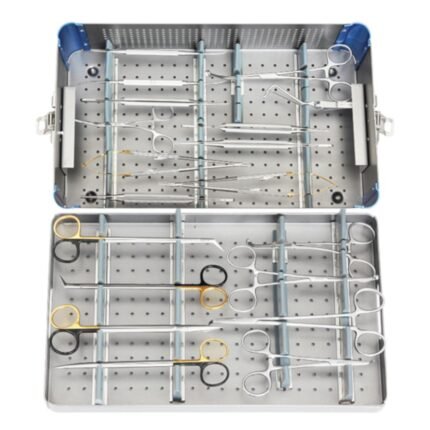


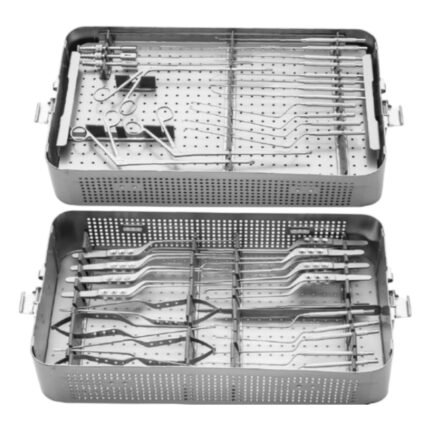


Reviews
There are no reviews yet.