
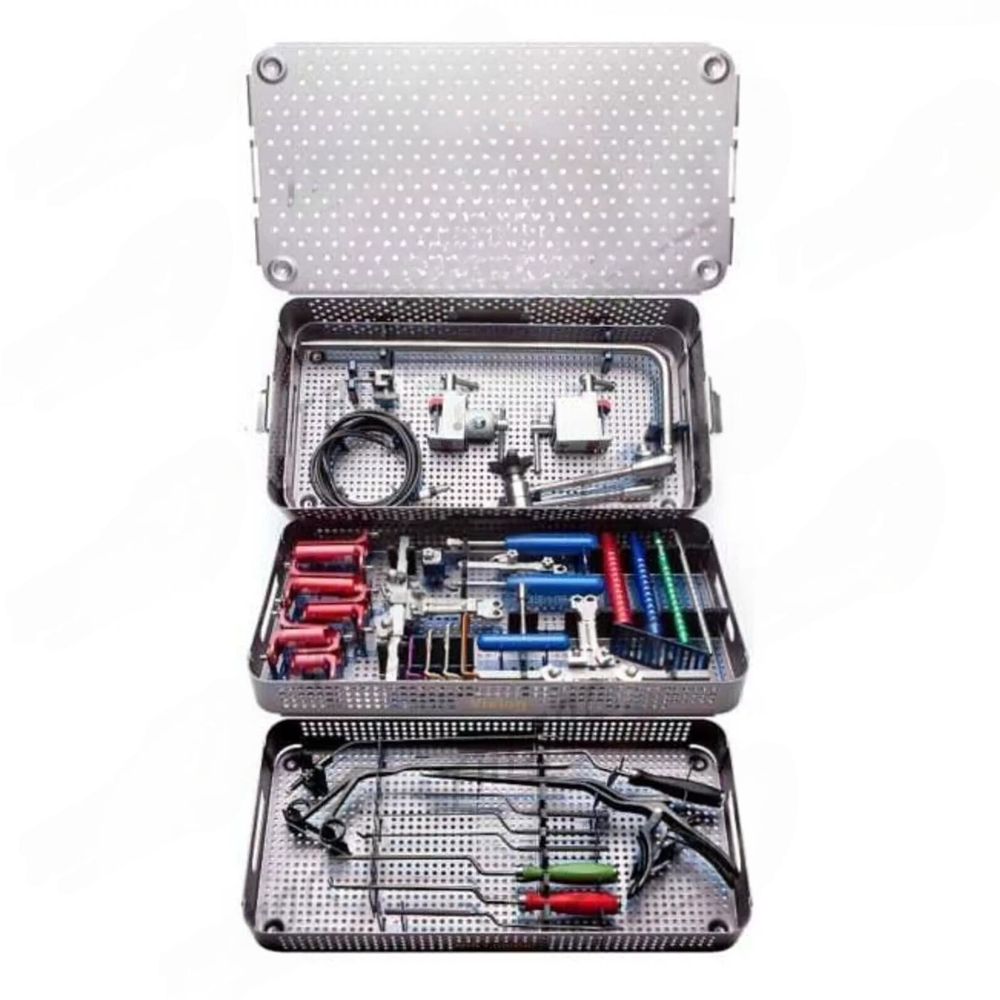
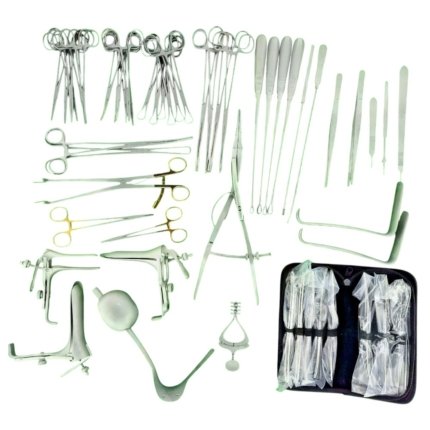
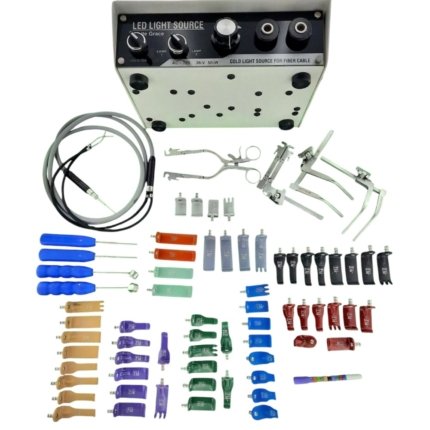
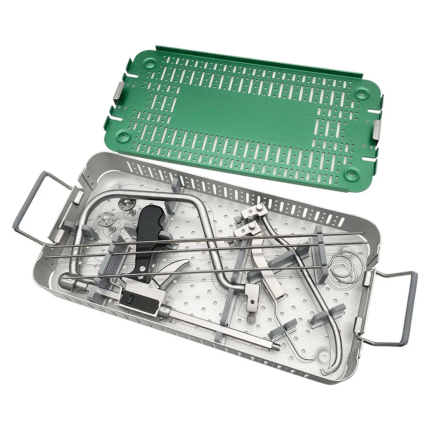
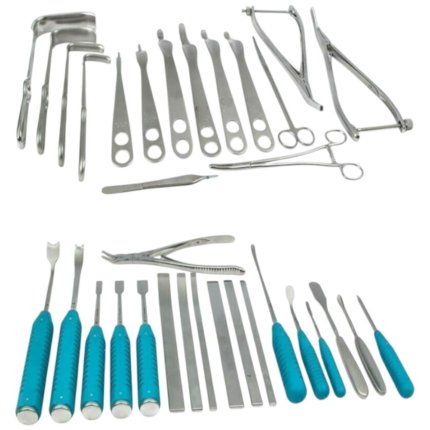
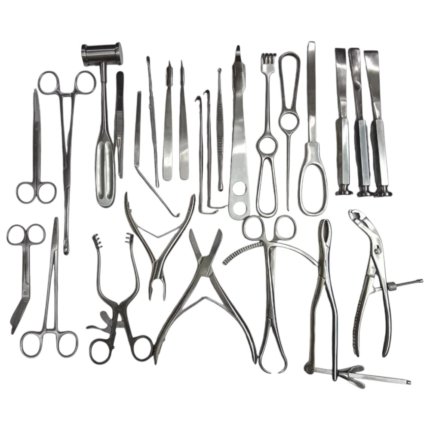
The Phantom MIS Complete Lumbar Retractor System – Spine Set is a specialized spinal surgery retraction system designed to support minimally invasive access to the lumbar spine. Minimally invasive spinal procedures require controlled exposure through a relatively limited operative corridor, making appropriate retraction instrumentation essential for maintaining access to the surgical site. A dedicated lumbar retractor system provides surgeons with a structured platform for positioning retractor blades and establishing an appropriate working corridor according to the surgical approach and patient anatomy.
The Phantom ML MIS lumbar retractor system is designed to facilitate minimally invasive exposure and decompression for procedures including TLIF, PLIF, and microdiscectomy. Available system information describes retractor arms that can provide multiple retraction configurations, while retractor blades are available in different lengths and widths to accommodate varying anatomical requirements.
A key advantage of the Phantom MIS Complete Lumbar Retractor System is its modular approach to surgical exposure. Lumbar anatomy and operative requirements can vary substantially between patients and procedures. Interchangeable blades and adjustable retraction components allow the surgical team to select an appropriate configuration for the desired exposure. This flexibility can be particularly useful when working through minimally invasive posterior approaches.
The system is intended to support controlled retraction of soft tissues around the lumbar operative field. Properly positioned blades can help maintain access to the target anatomy while allowing the surgeon to introduce additional spinal instruments through the established working corridor. The exact blade selection and amount of retraction should always be determined by the operating surgeon according to the surgical technique, operative level, patient anatomy, and applicable device instructions.
The Phantom MIS lumbar system can be used in appropriate minimally invasive spine procedures involving decompression and access to the disc space. Depending on the configuration, it may support procedures such as lumbar microdiscectomy, TLIF, and PLIF. The system should be considered part of a broader spinal surgical setup and may be used alongside specialized dilators, curettes, dissectors, pituitary instruments, bone preparation tools, and other lumbar spine instruments when clinically appropriate.
Available Phantom ML system information also describes tubular retractor options with multiple lengths, widths, and styles. These tubes are described as aluminum and radiolucent, making them suitable for procedures that incorporate fluoroscopic imaging. The system also incorporates an illumination concept designed to improve visualization through the operative corridor.
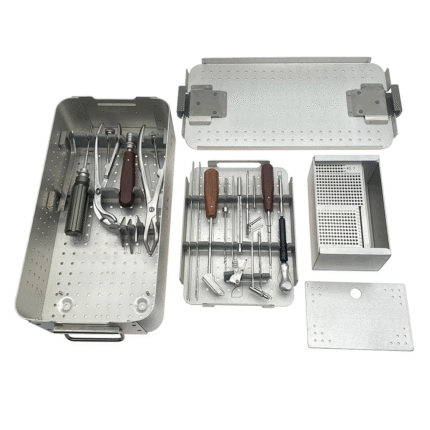
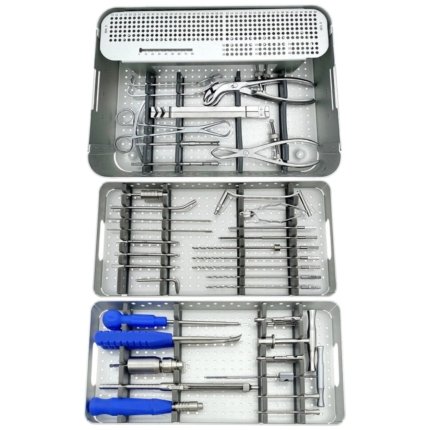
A complete lumbar retraction system provides practical operating-room advantages in addition to its surgical function. Keeping compatible blades, arms, and related retraction components together can simplify surgical preparation, instrument identification, and postoperative inventory. A coordinated spine set can also help surgical personnel prepare the required equipment for minimally invasive procedures without assembling individual retractor components from multiple unrelated trays.
The instruments and components should be inspected before every procedure. Retractor blades should be checked for deformation, damaged edges, corrosion, or other abnormalities, while mechanical components and connecting arms should be assessed for secure operation. Any component showing damage or impaired function should be removed from service and evaluated according to institutional procedures.
Reusable components require appropriate cleaning, inspection, and sterilization following each procedure. Cleaning should be performed using validated processes appropriate to the individual component design. Instruments should then be thoroughly inspected and sterilized according to the manufacturer’s validated instructions and the healthcare facility’s infection-control requirements. Light cables and illumination components, where included, should be processed according to their specific instructions.
The Phantom MIS Complete Lumbar Retractor System – Spine Set is suitable for hospitals, orthopedic spine departments, neurosurgical units, ambulatory surgical centers, and specialist minimally invasive spine facilities. Its modular retraction configuration supports controlled lumbar exposure while helping surgical teams maintain an organized and efficient instrumentation workflow.
Key Features
- Specialized Phantom MIS complete lumbar retractor system
- Designed for minimally invasive lumbar spine exposure
- Supports controlled soft-tissue retraction
- Suitable for appropriate TLIF and PLIF procedures
- Supports lumbar microdiscectomy and decompression applications
- Modular retractor configuration for flexible surgical setup
- Multiple blade lengths and widths available within the Phantom ML platform
- Retraction arms provide multiple configuration options
- Tubular retractor options available within the Phantom ML system
- Radiolucent aluminum tube options support fluoroscopic procedures
- Illumination options available for improved operative-field visualization
- Designed for professional orthopedic spine and neurosurgical environments
Product Specifications
| Specification | Details |
|---|---|
| Product Name | Phantom MIS Complete Lumbar Retractor System – Spine Set |
| Instrument Category | MIS Lumbar Retractor System |
| Primary Specialty | Orthopedic Spine Surgery / Neurosurgery |
| Primary Application | Minimally Invasive Lumbar Exposure |
| Potential Applications | TLIF, PLIF, Microdiscectomy, Decompression |
| Retraction Type | Modular / Adjustable |
| Blade Configuration | Multiple Lengths and Widths |
| Tubular Options | Available within Phantom ML platform |
| Tube Material | Aluminum for documented tubular configurations |
| Tube Property | Radiolucent |
| Illumination | Available in supported configurations |
| System Type | Complete Lumbar Spine Retraction System |
| Reusable | According to individual component specifications |
| Sterilization | According to validated manufacturer and facility protocols |
| Intended Users | Orthopedic Spine Surgeons and Neurosurgeons |
| Clinical Environment | Hospitals, Spine Centers, Surgical Centers |
FAQs
1. What is the Phantom MIS Complete Lumbar Retractor System used for?
The system is designed to provide controlled exposure and soft-tissue retraction during minimally invasive lumbar spine procedures, including appropriate decompression, TLIF, PLIF, and microdiscectomy techniques.
2. Is the Phantom MIS lumbar retractor suitable for TLIF and PLIF?
Yes. The Phantom ML MIS lumbar system is documented for minimally invasive exposure and decompression associated with TLIF and PLIF procedures.
3. Can the Phantom MIS system be used for microdiscectomy?
Yes. Phantom ML MIS lumbar retraction systems are designed to facilitate minimally invasive exposure for microdiscectomy procedures.
4. What are the benefits of a modular lumbar retractor system?
A modular system allows the surgical team to select appropriate blades and retraction components according to the operative level, surgical approach, and patient anatomy. Phantom ML documentation describes multiple blade lengths and widths and multiple retraction configurations.
5. Are Phantom MIS lumbar retractor blades available in different sizes?
Yes. Available system information describes retractor blades in multiple lengths and widths to accommodate different anatomical and surgical requirements.
6. Are Phantom MIS tubular retractors radiolucent?
Documented Phantom ML tubular retractors are made from aluminum and described as radiolucent, making them suitable for procedures using fluoroscopic imaging.
7. Does the Phantom MIS lumbar system include illumination?
Illumination is available within the Phantom ML platform, with documented LED lighting designed to improve visualization through the surgical corridor. The exact lighting components included should be confirmed against the specific set configuration.


Reviews
There are no reviews yet.