
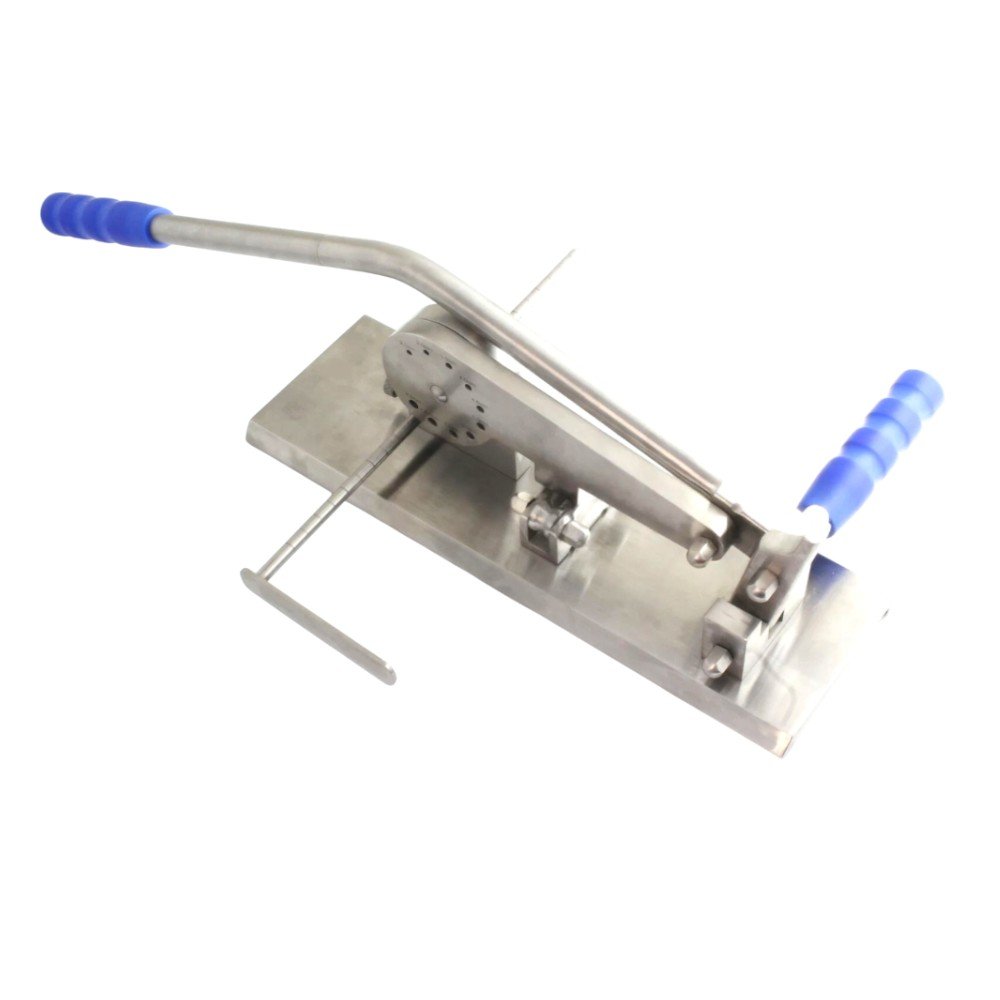
The Table Top Rod Cutter & Rod Bender – High Grade Spine Instrument is a specialized orthopedic spine instrument designed to assist with the preparation of spinal fixation rods during surgical procedures. Combining rod-cutting and rod-bending functionality in one instrument, it provides the surgical team with a practical solution for modifying compatible rods according to the requirements of a planned spinal construct.
Spinal fixation rods often require contouring to follow the anatomical profile of the treated spinal region. Appropriate rod contouring can help the surgeon prepare the implant for placement within a compatible fixation system. The rod bender is designed to apply controlled bending force, allowing the user to shape compatible rods according to the surgical plan and implant manufacturer’s specifications.
The integrated rod cutter is designed to cut compatible spinal rods to the required length. A dedicated rod-cutting mechanism provides mechanical leverage and concentrates cutting force at the intended location. The cutting capacity depends on the instrument design and the material, diameter, and construction of the rod. The manufacturer’s specified capacity should always be observed.
The table-top configuration provides a stable base during operation. Instead of relying solely on hand strength, the instrument can be positioned on a suitable stable work surface, allowing controlled manipulation of the rod. This design can be useful in surgical instrument preparation areas where rods need to be cut and contoured before implantation.
The rod bender and cutter should only be used with compatible spinal rods and within their specified operating limits. Excessive bending, repeated bending in the same location, or cutting rods beyond the instrument’s capacity can damage either the implant or the instrument. Rods should be prepared according to the specific fixation system and surgical technique being used.
The instrument may be useful for a variety of spinal fixation procedures involving compatible rods, including selected thoracic, lumbar, and lumbosacral constructs. The exact application depends on the rod system, implant material, rod diameter, surgical approach, and surgeon’s technique.
High-grade surgical construction is intended to provide durability during repeated instrument handling. Before each procedure, the cutting mechanism, bending components, joints, and working surfaces should be inspected for wear, deformation, corrosion, or other damage. Any instrument showing abnormal mechanical performance should be removed from service.
If the instrument is designated as reusable, it should be cleaned thoroughly after use, paying particular attention to the cutting and bending mechanisms. After cleaning, it should be rinsed, dried, inspected, and sterilized according to validated manufacturer instructions and the healthcare facility’s established reprocessing protocol.
The Table Top Rod Cutter & Rod Bender provides a practical solution for spinal implant preparation by combining two important rod-management functions in a stable table-top design. Its use should be limited to compatible rods and performed by appropriately trained surgical professionals familiar with the applicable spinal fixation system.
Key Features
- Combined spinal rod cutter and rod bender
- Stable table-top instrument configuration
- Designed for compatible spinal fixation rods
- Supports controlled rod cutting and length adjustment
- Provides controlled rod contouring and bending
- Useful for preparation of spinal fixation constructs
- Mechanical design provides leverage during rod modification
- Suitable for selected orthopedic spine procedures
- Applicable to compatible thoracic, lumbar, and lumbosacral rod systems
- High-grade surgical instrument construction
- Cutting and bending capacity depends on rod specifications
- Requires inspection and appropriate reprocessing before reuse
Product Specifications
| Specification | Details |
|---|---|
| Product Name | Table Top Rod Cutter & Rod Bender |
| Instrument Type | Spinal Rod Cutting & Bending Instrument |
| Surgical Specialty | Orthopedic Spine Surgery |
| Primary Functions | Rod Cutting and Rod Contouring |
| Configuration | Table Top |
| Application | Spinal Fixation Rod Preparation |
| Rod Compatibility | Compatible Rods, Size and Material Dependent |
| Surgical Region | Spine, Configuration Dependent |
| Construction | High-Grade Surgical Instrument Material |
| Operation | Manual / Mechanical |
| Cutting Capacity | Dependent on Instrument Specifications |
| Reusable | Depending on product designation |
| Sterilization | Follow validated manufacturer and facility protocols |
FAQs
1. What is a table-top rod cutter and bender used for?
It is used to prepare compatible spinal fixation rods by cutting them to an appropriate length and bending or contouring them according to the requirements of the spinal construct.
2. Can the instrument both cut and bend spinal rods?
Yes. This design combines rod-cutting and rod-bending functions in one table-top instrument.
3. Why is rod bending important in spine surgery?
Spinal fixation rods may need to be contoured to follow the desired anatomical alignment and fit the compatible fixation construct. The appropriate contour depends on the surgical plan and implant system.
4. What does the table-top design mean?
The instrument is designed to operate on a stable work surface, providing a fixed base and mechanical leverage for cutting and bending compatible rods.
5. Can this instrument cut any spinal rod?
No. Cutting capacity depends on the instrument’s specifications and the rod’s diameter, material, and construction. The manufacturer’s limits should always be followed.
6. Can the rod bender be used with titanium rods?
It may be suitable for compatible titanium rods if the instrument’s specifications allow it. Rod material and diameter should be verified before use.
7. Is this rod cutter and bender reusable?
It may be reusable when specifically designated as a reusable surgical instrument. Cleaning, inspection, maintenance, and sterilization should follow validated manufacturer instructions.
8. What should be inspected before using the instrument?
The cutting mechanism, bending components, joints, working surfaces, and base should be checked for corrosion, deformation, excessive wear, and proper mechanical operation before use.




Reviews
There are no reviews yet.