

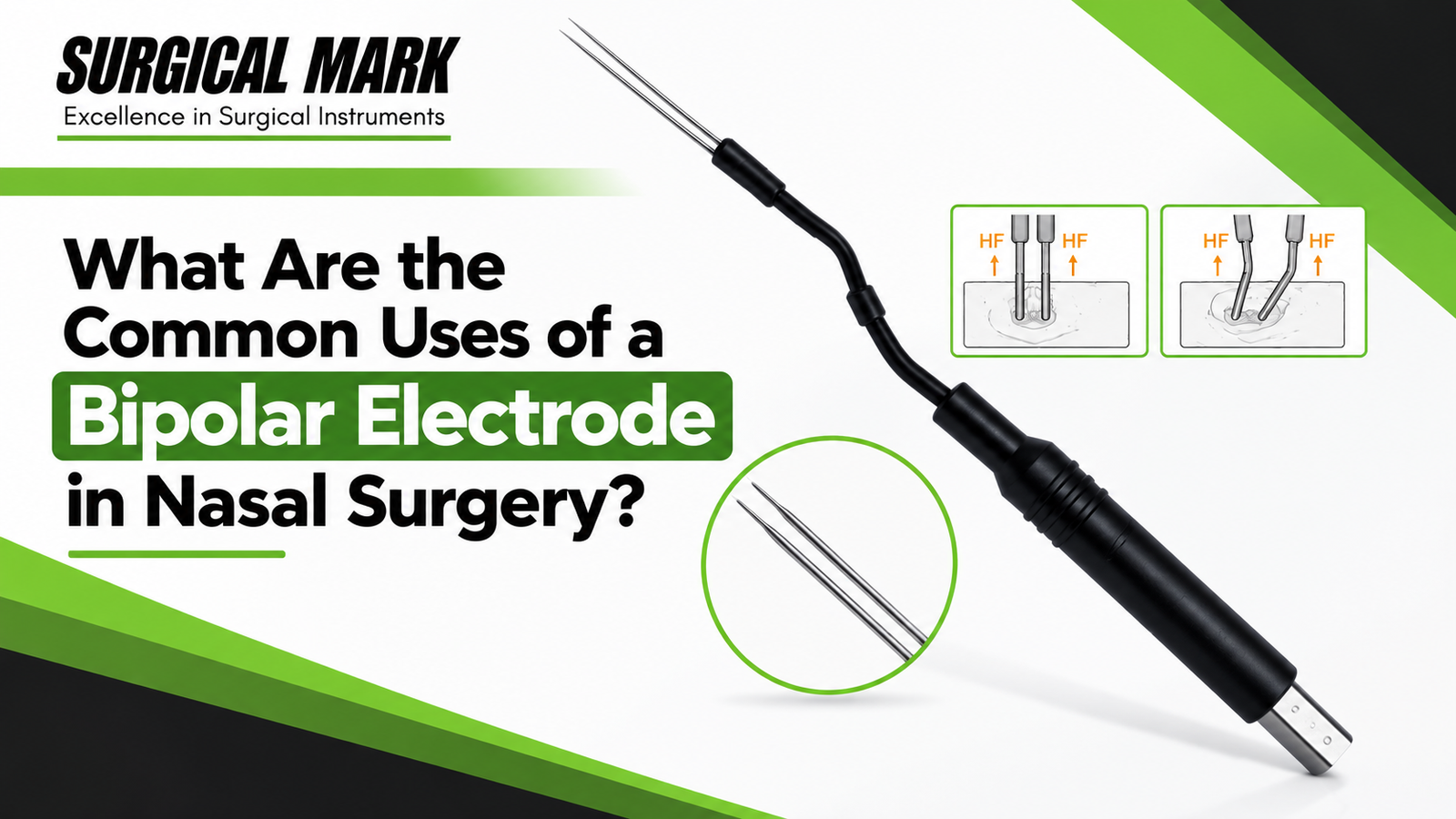
Bipolar electrodes are commonly used in electrosurgical procedures where controlled tissue coagulation and hemostasis are required. In nasal and ENT surgery, their compact design and localized energy delivery can be useful when working around delicate anatomical structures. Depending on the electrode design, they may be used for coagulation, control of bleeding, and selected tissue-reduction procedures.
Unlike monopolar electrosurgery, bipolar instruments deliver electrical energy between two closely positioned electrodes or tips. This confines the electrical circuit primarily to the tissue between the active tips, which can provide controlled coagulation in appropriately selected applications.
What Is a Bipolar Electrode?
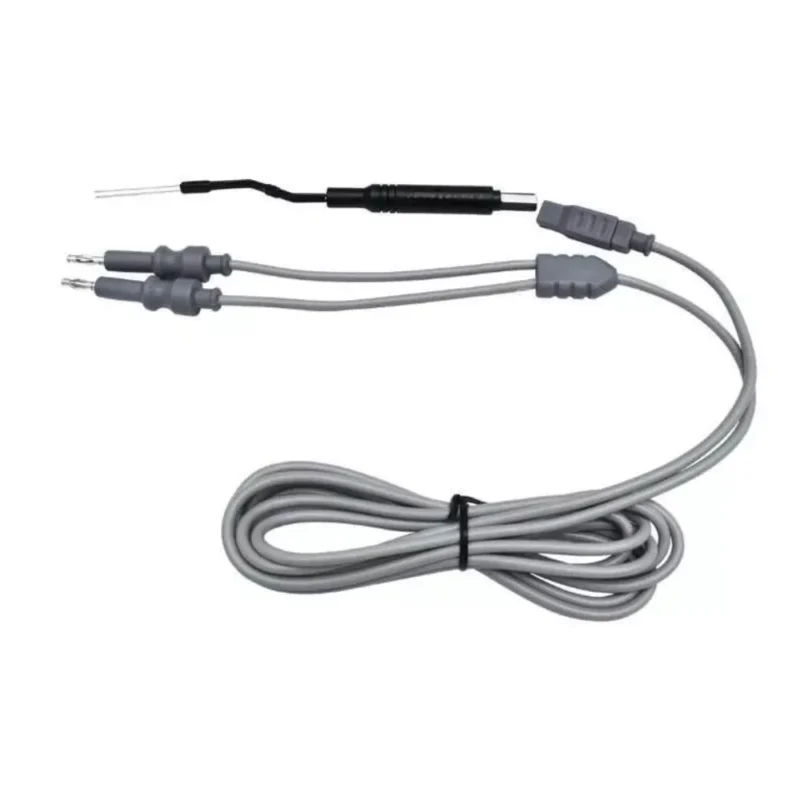
A bipolar electrode is an electrosurgical instrument with two conductive poles incorporated into the working end. When connected to a compatible bipolar generator, electrical energy passes between these poles through the tissue held or contacted between them.
Bipolar electrodes are available in different shapes, lengths, tip configurations, and working profiles. The appropriate design depends on the surgical procedure, anatomy, tissue characteristics, and electrosurgical generator being used.
In nasal surgery, the ability to apply energy to a relatively localized area can be useful when the surgeon needs controlled coagulation in a confined operative field.
Common Uses of Bipolar Electrodes in Nasal Surgery
1. Control of Nasal Bleeding
One of the important applications of bipolar electrosurgery in nasal procedures is hemostasis. Nasal tissues can bleed significantly because of their rich vascular supply, and controlling bleeding is important for maintaining visualization of the surgical field.
A bipolar electrode can be applied to appropriate bleeding tissue or vessels to achieve coagulation. The localized application of energy can help the surgeon address the bleeding point while limiting unnecessary exposure of surrounding tissue.
The exact technique and energy settings depend on the tissue, electrode design, generator, and surgical indication.
2. Coagulation During Nasal Tumor Procedures
Bipolar electrodes may be used as part of procedures involving selected nasal tumors or abnormal tissue when electrosurgical coagulation is indicated.
In these situations, the electrode can provide controlled coagulation of tissue or bleeding points associated with the procedure. It should not be assumed that a bipolar electrode itself is appropriate for every tumor or that it replaces excision or other tumor-specific treatment. Its use depends on the diagnosis and the surgical plan.
3. Tissue Reduction Procedures
Certain bipolar electrosurgical instruments are designed for tissue reduction or controlled coagulation. In selected nasal procedures, these instruments may be used to reduce targeted soft tissue when clinically appropriate.
The specific application depends heavily on the electrode’s design. A bipolar electrode intended for coagulation should not automatically be considered interchangeable with a specialized tissue-reduction device.
4. Hemostasis During Turbinate Surgery
Bipolar electrosurgery can be used for hemostasis during selected turbinate procedures. The nasal turbinates contain vascular tissue, making bleeding control an important part of many turbinate-related operations.
Depending on the technique and instrument, bipolar energy may be applied to targeted tissue to achieve coagulation while maintaining access to the operative field.
5. Coagulation in Endoscopic Nasal Procedures
Endoscopic nasal surgery frequently requires instruments that can function within a restricted field. Some bipolar electrodes are designed with narrow or elongated working ends that can be useful when access is limited.
In appropriate cases, bipolar coagulation can help manage bleeding during endoscopic procedures and maintain visibility through the nasal passage.
6. Hemostasis in Septal Procedures
Bipolar instruments may also have a role in controlling bleeding during selected septal procedures. When bleeding occurs from a suitable localized site, bipolar coagulation can provide a focused method of hemostasis.
The electrode configuration is particularly important because nasal anatomy is compact and the surgeon must maintain awareness of adjacent structures.
7. Control of Small Bleeding Vessels
Another potential application is coagulation of appropriately sized bleeding vessels encountered during nasal surgery.
Bipolar instruments are designed to concentrate electrical energy between their two poles. This can make them useful when a surgeon needs controlled coagulation at a specific location rather than broad application of electrosurgical energy.
Why Is Bipolar Electrosurgery Useful in Nasal Procedures?
The nasal cavity presents several challenges for electrosurgical instrumentation. It is a confined anatomical space containing delicate mucosa, vascular tissue, and structures that may be close to the operative site.
Bipolar electrodes can offer several practical characteristics:
- Localized energy delivery
- Controlled coagulation
- Compact working profiles
- Availability in different tip configurations
- Suitability for selected endoscopic procedures
- Reduced dependence on a distant return electrode compared with monopolar electrosurgery
These characteristics can make bipolar instruments useful when controlled hemostasis is required in a confined surgical field.
Bipolar Electrode vs Monopolar Electrode in Nasal Surgery
The primary difference between bipolar and monopolar electrosurgery is the path taken by electrical current.
With bipolar electrosurgery, the two electrodes are located at the working end of the instrument, and current passes through tissue between them. In monopolar electrosurgery, current travels from the active electrode through the patient’s body to a separate return electrode.
| Feature | Bipolar Electrode | Monopolar Electrode |
|---|---|---|
| Electrode arrangement | Two poles at working end | One active electrode |
| Current pathway | Primarily between the two poles | Through the body to a return electrode |
| Energy application | More localized | Broader current pathway |
| Common purpose | Controlled coagulation | Cutting and coagulation |
| Nasal application | Selected hemostasis and coagulation | Various electrosurgical applications |
| Instrument design | Often forceps, tips, or specialized electrodes | Pencil, blade, needle, loop, and other electrodes |
The choice between bipolar and monopolar electrosurgery should be based on the procedure, tissue, instrument, generator compatibility, and surgeon preference.
How Does the Electrode Design Affect Performance?
Not all bipolar electrodes are identical. Their geometry can substantially affect how they are used.
Tip Configuration
Fine, narrow tips may provide access to smaller anatomical areas, while broader working ends may be designed for different coagulation requirements.
Shaft Length
Longer shafts can facilitate access through the nasal passage or endoscopic approach, while shorter instruments may be appropriate for more accessible surgical fields.
Angulation
Angled working ends can improve access to anatomical areas that are difficult to approach with a straight instrument.
Insulation
Proper insulation helps confine electrical energy to the intended conductive portions of the instrument. Damaged insulation can compromise electrosurgical performance and should be identified during inspection.
Using Bipolar Electrodes in Endoscopic Nasal Surgery
Endoscopic procedures require instruments that can be introduced through restricted access while allowing the surgeon to maintain visualization.
A bipolar electrode with an appropriate shaft length, diameter, and tip profile can be selected according to the surgical approach. Its use may be particularly relevant when localized coagulation is required without unnecessarily obstructing the endoscopic field.
Instrument selection should always account for compatibility with the endoscope, access route, electrosurgical generator, and intended procedure.
Important Considerations When Selecting a Bipolar Electrode
When choosing a bipolar electrode for nasal surgery, surgical teams may consider:
- Intended clinical application
- Tip shape and size
- Shaft length
- Working-end angulation
- Instrument diameter
- Generator compatibility
- Insulation quality
- Reusable or single-use construction
- Sterilization requirements
- Ergonomic handling
- Manufacturer’s recommended operating parameters
The electrode should be selected according to its intended indication rather than simply by appearance or size.
Cleaning and Sterilization
Reusable bipolar electrodes require appropriate cleaning, inspection, and sterilization according to the manufacturer’s instructions and the healthcare facility’s validated processing protocol.
After use, visible biological material should be removed according to the instrument’s approved cleaning procedure. The working tips, insulation, joints, and connectors should be inspected for damage or residue.
Particular attention should be given to insulation because cracks, cuts, or other defects can affect electrosurgical safety. Instruments that fail inspection should not be returned to clinical use.
Not every bipolar electrode is designed for repeated sterilization, so the manufacturer’s instructions should determine whether an instrument is reusable and which sterilization method is appropriate.
Frequently Asked Questions
What is a bipolar electrode used for in nasal surgery?
A bipolar electrode is primarily used for controlled coagulation and hemostasis in selected nasal and ENT procedures. Depending on its design, it may also be used in specific tissue-reduction applications.
Can a bipolar electrode be used for nasal tumor procedures?
It may be used for selected coagulation or hemostatic purposes during procedures involving nasal tumors, depending on the diagnosis and surgical plan. It does not replace tumor-specific treatment or excision when those are required.
What is the advantage of bipolar electrosurgery in the nose?
Bipolar electrosurgery can provide localized energy delivery between two electrodes at the working end, which can be useful when controlled coagulation is required in the confined nasal cavity.
Is a bipolar electrode the same as a monopolar electrode?
No. A bipolar electrode has two active poles at its working end, while monopolar electrosurgery uses one active electrode and a separate patient return electrode.
Can bipolar electrodes be used during endoscopic nasal surgery?
Certain bipolar electrodes are designed for use in confined or endoscopic surgical fields. Their suitability depends on the instrument’s design, access requirements, and compatible electrosurgical equipment.
Are all bipolar electrodes reusable?
No. Some are reusable while others are designed for single use. Reusable instruments must be processed according to the manufacturer’s validated cleaning and sterilization instructions.
Why is insulation important on a bipolar electrode?
Insulation helps prevent unintended electrical contact with surrounding tissue and other conductive surfaces. The instrument should be inspected regularly for insulation damage before use.
Conclusion
Bipolar electrodes can be valuable electrosurgical instruments in selected nasal and ENT procedures, particularly when localized coagulation and hemostasis are required. Their applications may include control of bleeding during nasal surgery, selected tumor-related procedures, turbinate surgery, septal procedures, and endoscopic interventions.
The specific electrode should be chosen according to the procedure, anatomical access, working-end design, generator compatibility, and manufacturer’s intended use. Proper handling, inspection, cleaning, and sterilization are also essential for reusable instruments.
For surgeons and operating-room professionals, understanding the differences between bipolar electrode designs can help support appropriate instrument selection for the specific nasal procedure being performed.