

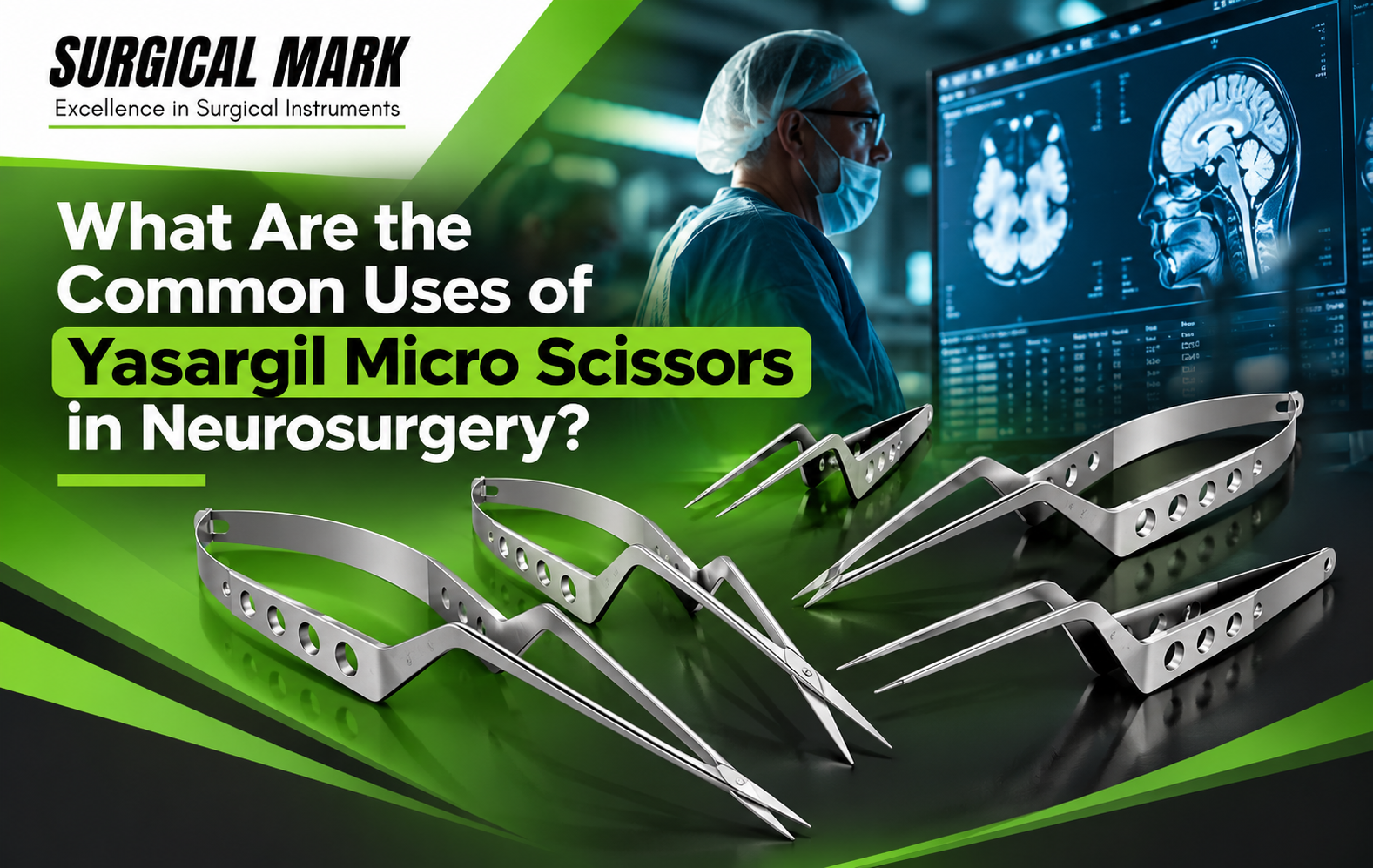
Yasargil micro scissors are specialized microsurgical instruments designed for precise cutting and dissection in delicate neurosurgical procedures. Their fine blades, controlled movement, and specialized configurations allow surgeons to work within small operative fields where conventional surgical scissors may be too large or difficult to manipulate.
They are particularly associated with microsurgical neurosurgery, where maintaining precise control and minimizing unnecessary tissue manipulation are important.
What Are Yasargil Micro Scissors?
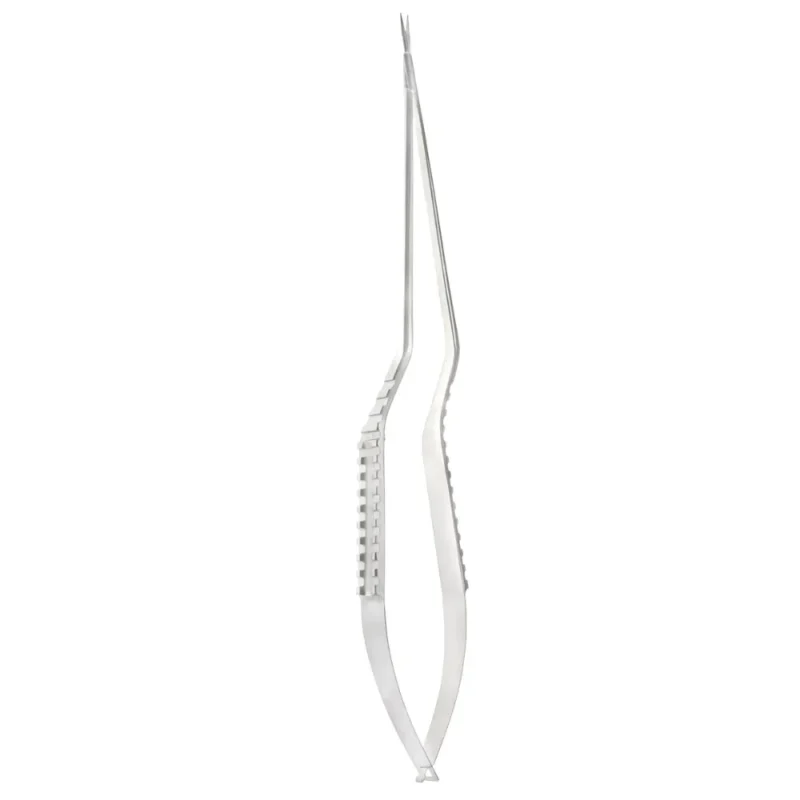
Yasargil micro scissors are fine surgical scissors developed for microsurgical applications. They typically feature slender shafts, delicate working tips, and handles designed to provide controlled finger movement.
Different models may vary in blade length, curvature, tip configuration, and overall instrument length. These variations allow surgeons to select an instrument suited to the anatomy and approach involved in a particular procedure.
The term “Yasargil” is commonly associated with microsurgical instruments used in neurosurgery, particularly instruments designed for work under an operating microscope.
Why Are Micro Scissors Important in Neurosurgery?
Neurosurgical procedures frequently involve working around delicate anatomical structures. The brain, cranial nerves, blood vessels, and other tissues can require careful dissection and precise cutting.
Micro scissors provide a smaller working profile than conventional surgical scissors. Their fine blades can allow controlled cutting in areas where a larger instrument could obstruct visualization or provide insufficient precision.
Their value is therefore closely related to instrument scale, tip control, visualization, and access.
Common Uses of Yasargil Micro Scissors
1. Microsurgical Tissue Dissection
One of the primary applications of micro scissors is controlled tissue dissection.
During microsurgery, the surgeon may need to separate or divide thin tissue structures while maintaining visualization of nearby anatomy. Fine scissors can provide a precise cutting action while reducing the need for large movements.
The exact type of scissors selected depends on the tissue, surgical approach, and required blade orientation.
2. Cutting Fine Membranes
Micro scissors can be used to divide thin membranes encountered during neurosurgical procedures.
Their delicate blades are designed for controlled cutting rather than the broader tissue manipulation associated with conventional surgical scissors.
This can be particularly relevant during procedures where thin anatomical layers must be opened or divided under magnification.
3. Arachnoid Dissection
The arachnoid membrane is frequently encountered during intracranial microsurgical procedures. Fine microsurgical scissors may be used as part of the dissection process when the surgeon needs to open or divide selected arachnoid structures.
The instrument’s fine working end can help provide controlled access while the operative field is viewed under magnification.
4. Cerebrovascular Microsurgery
Yasargil-style micro scissors may also be used during cerebrovascular procedures where precise dissection around blood vessels is required.
Procedures involving intracranial arteries and aneurysms can require careful separation of tissues surrounding vascular structures. Micro scissors can provide controlled cutting and dissection when appropriately selected for the surgical approach.
The specific instrument configuration depends on the vessel location, access route, and surgical technique.
5. Aneurysm Surgery
Microsurgical treatment of intracranial aneurysms can involve detailed dissection around the aneurysm, parent vessels, perforating arteries, and surrounding tissue.
Fine micro scissors can be used during selected stages of tissue dissection. Their small blades and controlled movement can be advantageous when working within a confined microsurgical field.
The instrument is generally used as part of a broader microsurgical instrument set rather than as a standalone tool.
6. Brain Tumor Microsurgery
During brain tumor procedures, micro scissors may be used for selected tissue-cutting and dissection tasks.
Depending on the tumor location and surgical approach, the surgeon may need instruments capable of working around delicate structures while maintaining visualization.
Micro scissors can complement other neurosurgical instruments such as micro forceps, dissectors, suction instruments, and bipolar forceps.
7. Cranial Nerve Dissection
Some neurosurgical procedures require dissection around cranial nerves and adjacent structures. Fine microsurgical scissors can be selected when a precise cutting instrument is needed.
The small working profile can help the surgeon operate within restricted anatomical spaces under magnification.
Straight vs Curved Yasargil Micro Scissors
Yasargil micro scissors are available in different configurations, including straight and curved blade designs.
Straight micro scissors provide a direct cutting path and can be useful when the surgeon has a relatively unobstructed approach to the target.
Curved micro scissors can provide an alternative approach angle and may be useful when the anatomy or surgical corridor makes a straight instrument less convenient.
The choice depends on the operative field, target location, and surgeon’s preferred technique.
Blade Design and Cutting Control
The blade is a critical component of any microsurgical scissors.
Fine, sharp blades are designed to provide controlled cutting with minimal unnecessary movement. Blade length also affects how the instrument behaves within the operative field.
Shorter blades can provide precise cutting at the immediate working tip, while longer blades may provide a different cutting range.
The appropriate configuration depends on the intended application.
Use Under an Operating Microscope
Yasargil micro scissors are designed around the requirements of microsurgery, where the operative field is magnified.
Under an operating microscope, even small changes in instrument position can significantly affect the working area. A fine instrument allows the surgeon to make controlled movements while maintaining visualization.
The slender shaft can also help reduce obstruction within the microscope’s field of view.
How Micro Scissors Complement Other Neurosurgical Instruments
Micro scissors are rarely used alone. Neurosurgical microsurgical procedures often require a combination of instruments, each serving a specific function.
For example:
- Micro forceps can grasp or stabilize delicate tissue.
- Bipolar forceps can provide controlled bipolar coagulation.
- Micro dissectors can separate tissue planes.
- Micro scissors can divide selected tissues or membranes.
- Fine suction instruments can help maintain visualization.
Using instruments with complementary functions allows the surgical team to select the appropriate tool for each stage of the procedure.
Factors to Consider When Selecting Yasargil Micro Scissors
Different procedures may require different configurations. Important selection factors include:
Blade Length
The blade should provide sufficient cutting capacity while maintaining the desired level of control.
Blade Curvature
Straight and curved blades provide different approaches to the surgical field.
Tip Configuration
Fine or specialized tips can be selected according to the intended microsurgical application.
Overall Length
The total instrument length should correspond to the depth and accessibility of the operative field.
Handle Design
A suitable handle should allow controlled finger movement and precise opening and closing.
Material and Finish
The instrument should be manufactured from appropriate surgical-grade materials and have a surface finish suitable for repeated processing when designed as a reusable instrument.
Cleaning and Sterilization
Reusable Yasargil micro scissors require careful cleaning, inspection, and sterilization according to the manufacturer’s instructions.
Because microsurgical instruments have fine working components, they should be handled carefully during instrument processing.
Before sterilization, inspect the scissors for:
- Blade alignment
- Smooth opening and closing
- Damaged or bent tips
- Corrosion
- Surface damage
- Loose components
- Residual biological material
The scissors should be processed using the validated method specified by the manufacturer.
Frequently Asked Questions
What are Yasargil micro scissors used for?
Yasargil micro scissors are used for precise cutting and dissection during microsurgical procedures, particularly in neurosurgery.
Are Yasargil micro scissors used for aneurysm surgery?
They can be used during selected microsurgical dissection steps in aneurysm procedures, depending on the surgical technique and instrument configuration.
What is the difference between straight and curved micro scissors?
Straight scissors provide a direct cutting path, while curved scissors provide an angled working approach that may be useful in restricted surgical corridors.
Why are micro scissors used under a microscope?
Their fine working tips and slender design are suited to the small operative fields encountered during microsurgery and can facilitate controlled cutting under magnification.
Can Yasargil micro scissors be used for brain tumor surgery?
Micro scissors may be used for selected tissue dissection and cutting tasks during brain tumor procedures, depending on the surgical approach and intended application.
How should reusable micro scissors be maintained?
They should be cleaned, inspected, sterilized, and stored according to the manufacturer’s instructions, with particular attention to blade alignment and tip condition.
Conclusion
Yasargil micro scissors are precision instruments designed for the demanding requirements of neurosurgical microsurgery. Their fine blades, slender profile, and controlled handling make them useful for selected applications such as microsurgical dissection, membrane cutting, arachnoid dissection, cerebrovascular procedures, aneurysm surgery, brain tumor surgery, and dissection around delicate anatomical structures.
The appropriate scissors configuration depends on the surgical approach and the specific task. Blade length, curvature, tip design, instrument length, and handle characteristics should all be considered when selecting micro scissors for a particular neurosurgical application.