

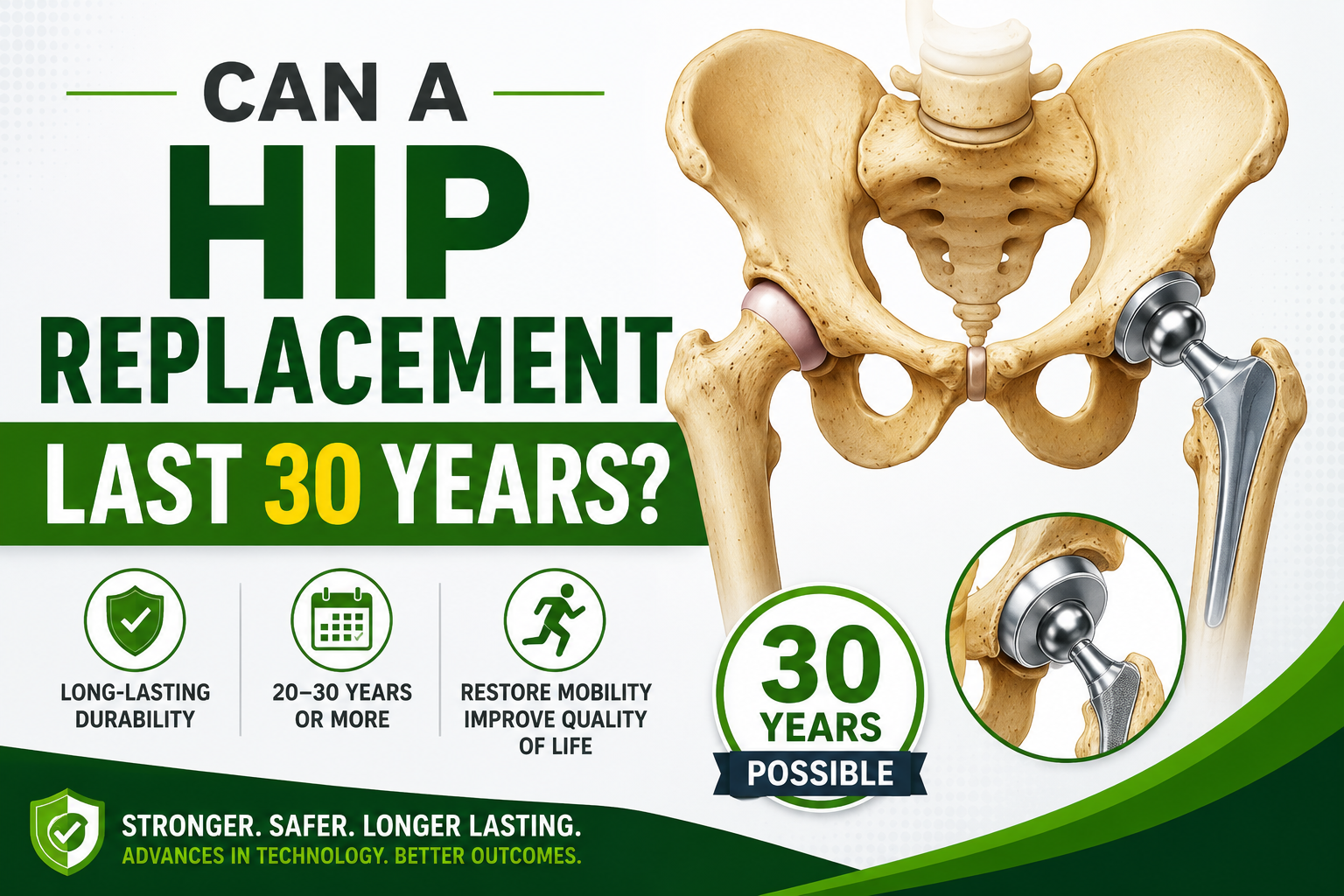
Yes, a modern hip replacement can last 30 years or even longer for many patients. Advances in orthopedic implant materials, surgical techniques, and implant design have significantly improved the longevity of total hip replacements. While no implant can be guaranteed to last a lifetime, long-term studies show that many modern hip replacements continue to function successfully for three decades, particularly when implanted correctly and cared for properly.
For many patients who undergo hip replacement surgery later in life, a single implant may provide reliable function for the rest of their lives without requiring revision surgery.
What Is the Average Lifespan of a Hip Replacement?
Modern hip implants are built to withstand millions of walking cycles over many years. Clinical research has consistently shown excellent long-term survival rates for total hip replacements.
| Years After Surgery | Average Implant Survival |
|---|---|
| 10 Years | More than 95% |
| 15 Years | Around 90–95% |
| 20 Years | Approximately 85–90% |
| 25–30 Years | Many implants continue to perform successfully |
Although these figures represent average outcomes, many patients continue to enjoy excellent hip function well beyond 30 years.
Why Do Modern Hip Replacements Last Longer?
Today’s orthopedic implants are manufactured using advanced biomaterials that offer superior wear resistance and long-term durability.
Several technological improvements have contributed to longer implant survival, including highly cross-linked polyethylene liners that generate less wear, ceramic bearing surfaces with exceptional hardness, titanium alloys that promote excellent bone integration, cobalt-chromium components with outstanding strength, and precision-engineered implant designs that improve load distribution.
Modern surgical planning, robotic-assisted surgery, and computer-guided implant positioning have also improved the accuracy of implant placement, reducing unnecessary stress and extending implant lifespan.
Factors That Determine Whether a Hip Replacement Lasts 30 Years
The longevity of a hip replacement depends on several important factors rather than the implant alone.
Patient Age
Older patients often place fewer mechanical demands on their implants, allowing the replacement to function successfully for many decades. Younger, more active individuals typically place greater stress on the implant over a longer period and may eventually require revision surgery.
Activity Level
Low-impact activities such as walking, swimming, cycling, and golfing help maintain joint mobility without causing excessive wear.
High-impact sports, repetitive jumping, heavy lifting, and long-distance running may accelerate implant wear over time.
Body Weight
Maintaining a healthy weight reduces the forces transmitted through the hip joint during daily activities. Lower mechanical stress generally contributes to longer implant survival.
Implant Materials
The choice of implant materials plays a significant role in long-term performance.
Ceramic-on-polyethylene and ceramic-on-ceramic bearing surfaces have demonstrated excellent wear resistance and are widely used in modern hip replacement surgery.
Highly cross-linked polyethylene has dramatically reduced wear particles compared with earlier generations of implant liners.
Surgical Technique
Even the highest-quality implant depends on proper surgical implantation. Accurate alignment improves joint stability, distributes forces evenly, minimizes abnormal wear, and reduces the risk of loosening or dislocation.
Experienced orthopedic surgeons carefully position each component to maximize long-term success.
Can Younger Patients Expect a 30-Year Hip Replacement?
Many younger patients can achieve excellent long-term outcomes with modern hip implants. However, because they typically remain active for several decades after surgery, they are statistically more likely to require a revision procedure later in life.
Fortunately, continuous improvements in implant technology have significantly reduced revision rates compared with previous generations of hip replacements.
Signs a Hip Replacement May Need Revision
Although modern implants are highly durable, they may eventually require replacement if complications develop.
Patients should seek orthopedic evaluation if they experience persistent hip pain, increasing stiffness, reduced mobility, joint instability, recurrent dislocations, implant loosening, infection, unusual clicking or grinding sensations, or progressive loss of function.
Early diagnosis often allows problems to be managed before significant damage occurs.
How to Help Your Hip Replacement Last Longer
Patients can maximize the lifespan of their hip replacement by following healthy lifestyle habits and their surgeon’s recommendations.
Maintaining a healthy body weight, exercising regularly with low-impact activities, strengthening the surrounding muscles, avoiding repetitive high-impact movements, attending scheduled follow-up appointments, and promptly treating infections all contribute to long-term implant success.
Consistent postoperative care is just as important as choosing a high-quality implant.
Frequently Asked Questions
Is a 30-year hip replacement common?
While not every implant lasts three decades, many modern hip replacements now reach or exceed 30 years, particularly in patients with healthy lifestyles and well-positioned implants.
What is the most durable hip implant?
Ceramic-on-ceramic and ceramic-on-highly cross-linked polyethylene bearing surfaces are among the most durable options currently available. Titanium and cobalt-chromium alloys are also widely used because of their strength, corrosion resistance, and biocompatibility.
Can a hip replacement last a lifetime?
For many patients undergoing hip replacement after the age of 65, there is a good possibility that the implant will last for the remainder of their lives without requiring revision surgery.
What causes a hip replacement to wear out?
The most common causes include normal wear over many years, implant loosening, infection, recurrent dislocation, excessive physical stress, poor implant positioning, and trauma.
Final Thoughts
Yes, a hip replacement can last 30 years, and in some cases even longer. Thanks to remarkable advances in implant materials, engineering, and surgical techniques, modern total hip replacements provide outstanding durability and long-term performance. Many patients enjoy decades of pain-free mobility, improved independence, and a significantly better quality of life after surgery.
Although every patient’s outcome is unique, maintaining a healthy weight, staying physically active with low-impact exercise, attending regular follow-up appointments, and following your orthopedic surgeon’s advice can greatly increase the chances that your hip replacement will continue functioning successfully for 30 years or more.